 Evander Batson
 xinhe feng
 FluffyLeecy
 frankiezek
 gaboratparsons
 giang063
 gracegotlost
 lauriewaxman
 Siwen Li
 Xiaofeng Lin
 Yury Gitman
 mar28th
 Max(TONG WEN)
 Soohyun
 sabotai
 Susan Lin
9 Amazing Prototypes
Of my 6 ideas, I decided to focus on Haunted Fridge, the shoot-em-up game that uses real world energy use to generate levels, and Sound Ball (working title), a set of physical balls that can be manipulated to create sound and music.
ROLE

Haunted Fridge Role
Haunted Fridge should be a casual game. One of the reasons people would want to play is to see the levels inadvertently created by their friends. This could also lead to peer pressure to be more energy efficient as people become more acutely aware of the energy habits of themselves and the people around them.

Sound Balls Role
In addition to free form play, the Sound Balls could be used in a performance setting. Most likely this would be alongside other instruments, either electronic or not. Both the surface they are being used on and the gestures used to manipulate the balls would contribute to the performance.

Sound Balls Role 2
The Sound Balls afford free form play and exploration. If made available in an inviting place, people could interact with them, making amusing sounds and learning the system. The balls should create pleasing sounds no matter what happens to them, to make play fun without any introduction beng necessary, but should also allow more advanced users to to have some purposeful control over the sounds being made.
Look and Feel
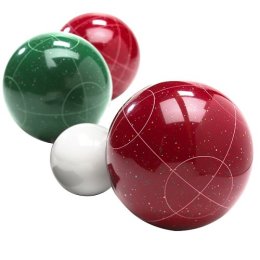
Sound Balls look and Feel
I found the bocce balls were about the weight and size I imagine the balls being, so they act as a good stand in for the real thing.
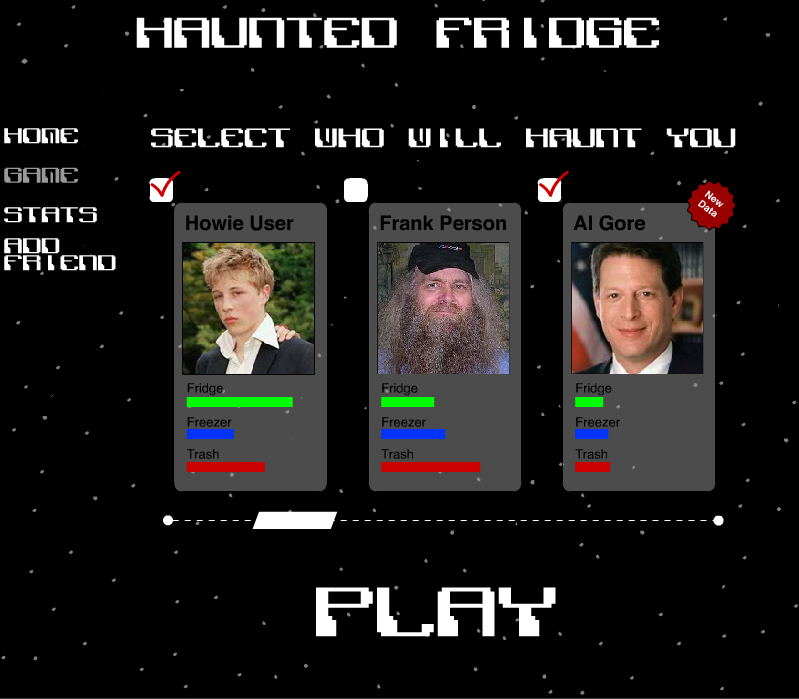
Haunted Fridge Look And Feel 1
The website should be simple. I don’t need to create a new social networking site, just a way that people can play the game using their friend’s data.
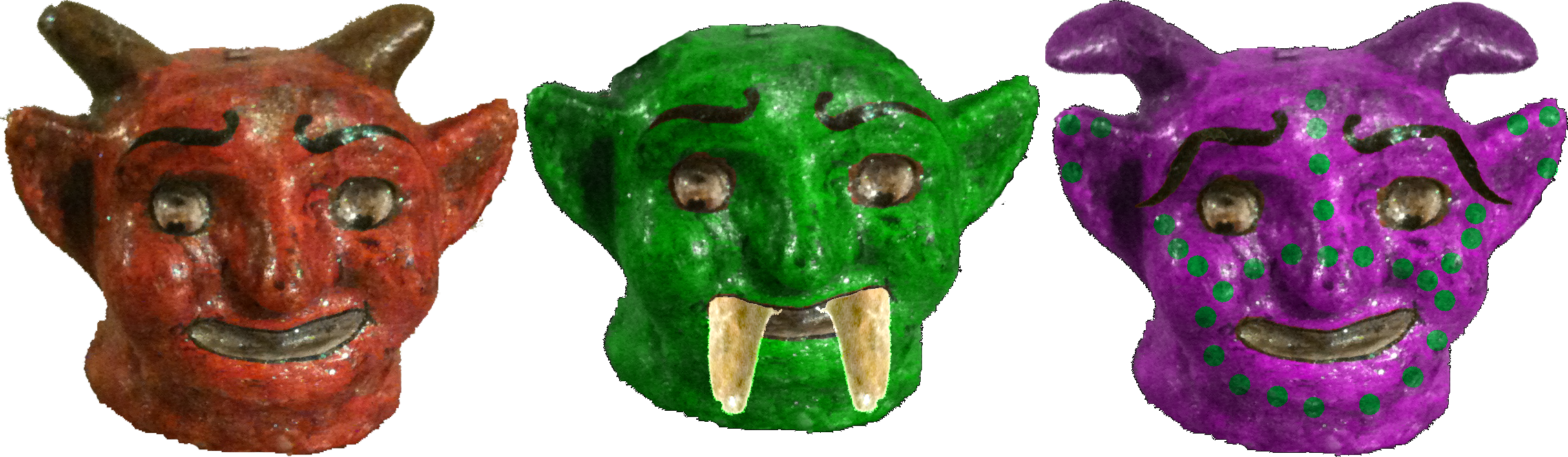
Haunted Fridge Look And Feel 2
I like the devil head I used for my spring break project, but the different sensors should look like different demons and ghosts. These designs are loosely based on Himalayan demon masks. A few can be seen here.
Implementation
Sound Balls Implementation 1
My first sound balls prototype uses OpenFrameworks to generate a sound based on the the distance of each ball to the other ones.
Source Code
Sound Balls Implementation 2
This implementation prototype shows how I could use openFrameworks and Super Collider to create sounds based on the balls location to one another.
Any time a ball is being moved, it creates atone based on it’s speed and average proximity to all other balls.
When two balls collide, a chime sound is cerated based on the distance to the next closest ball not in the collision ad the speed of the collision.
At this point, the physics are somewhat wonky, but that was not the focus of this test, since these balls should exist as real world objects.
Source Code
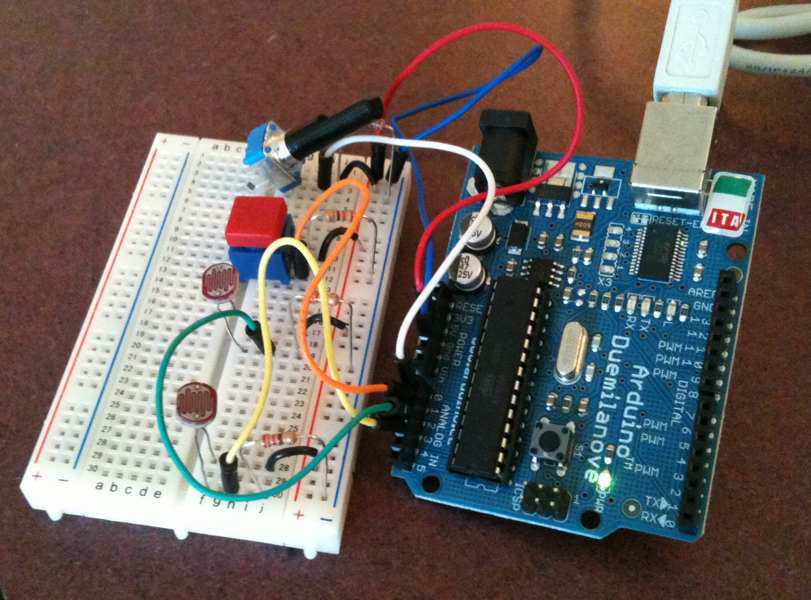
Haunted Fridge Implementation
This is a more robust version of the sensor I used for my spring break project. This can sense and log 4 values: Freezer open, fridge open, faucet running (including volume), and dishwasher being run. This would essentially be the central unit getting the info from the sensors. It was made by loading Firmata onto and Arduino and having that communicate with Processing to create a text file that looks like this.
Source Code
BONUS Haunted Fridge Implementation
Here’s the game I made over spring break. This is a good (if simple) example of what the final game would feel like
Source Code

 victor are discussing.
  Making Toys
victor 8:46 pm on March 28, 2011 Permalink |
first picture. AMAZING
victor 8:47 pm on March 28, 2011 Permalink |
no wait, second picture. AMAZING
andywallace 10:12 pm on March 28, 2011 Permalink |
Question: What was the easiest thing about the 9 prototypes. What was the hardest?
Figuring out the roles was probably the hardest. I know what I want my projects to do, but I’m not always exactly sure how they would fit into people’s lives. Obviously, it’s a question I need to answer, but it was tricky to actually work it out in a way that wasn’t me saying what it does or how it does it. My relative inability as a free hand artists was not helpful for that.
The easiest was probably the Sound Balls implementation prototypes. Although they took me a fair amount of time to make (especially the second one), I found the work really interesting. Actually trying to express what I want the project to do caused it to go very quickly through a few iterations as I played and found what kind of interactions were interesting or fun versus the kind that felt stagnant.