 Evander Batson
 xinhe feng
 FluffyLeecy
 frankiezek
 gaboratparsons
 giang063
 gracegotlost
 lauriewaxman
 Siwen Li
 Xiaofeng Lin
 Yury Gitman
 mar28th
 Max(TONG WEN)
 Soohyun
 sabotai
 Susan Lin
More super quick prototyping
Even though all these are super rough cardboard and paper glued and taped together, I’ve learned a lot already about some very specific areas I’ll need to research and focus on.
So, three roles the HUD which I’m now switching to it’s proper acronym HMD (Helmet Mounted Display).
#1 When riding in a group (all have HMD helmets)
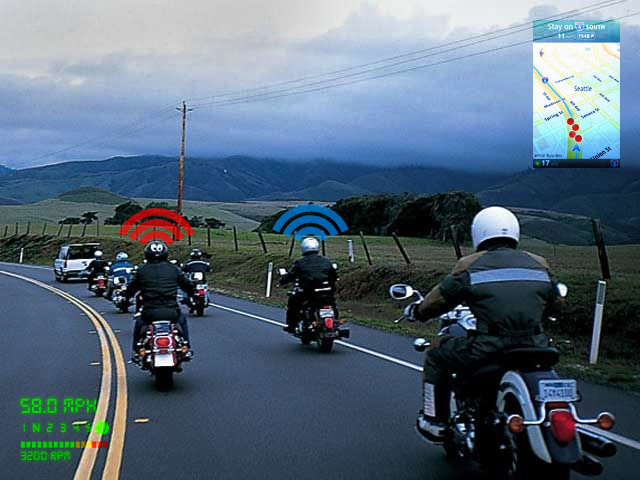
The system taps into your smart phones GPS for maps and turn by turn directions. With this same technology all riders in a group can be marked on the map displayed, this way if some members get stuck at a stop light or caught in traffic they can still keep track of where their friends are headed. The helmet also takes advantage of smart phones being an actual phone. Riders can set up a conference call before heading out so they can communicate with each other in case plans change, someone needs to stop, etc.
#2 When riding alone

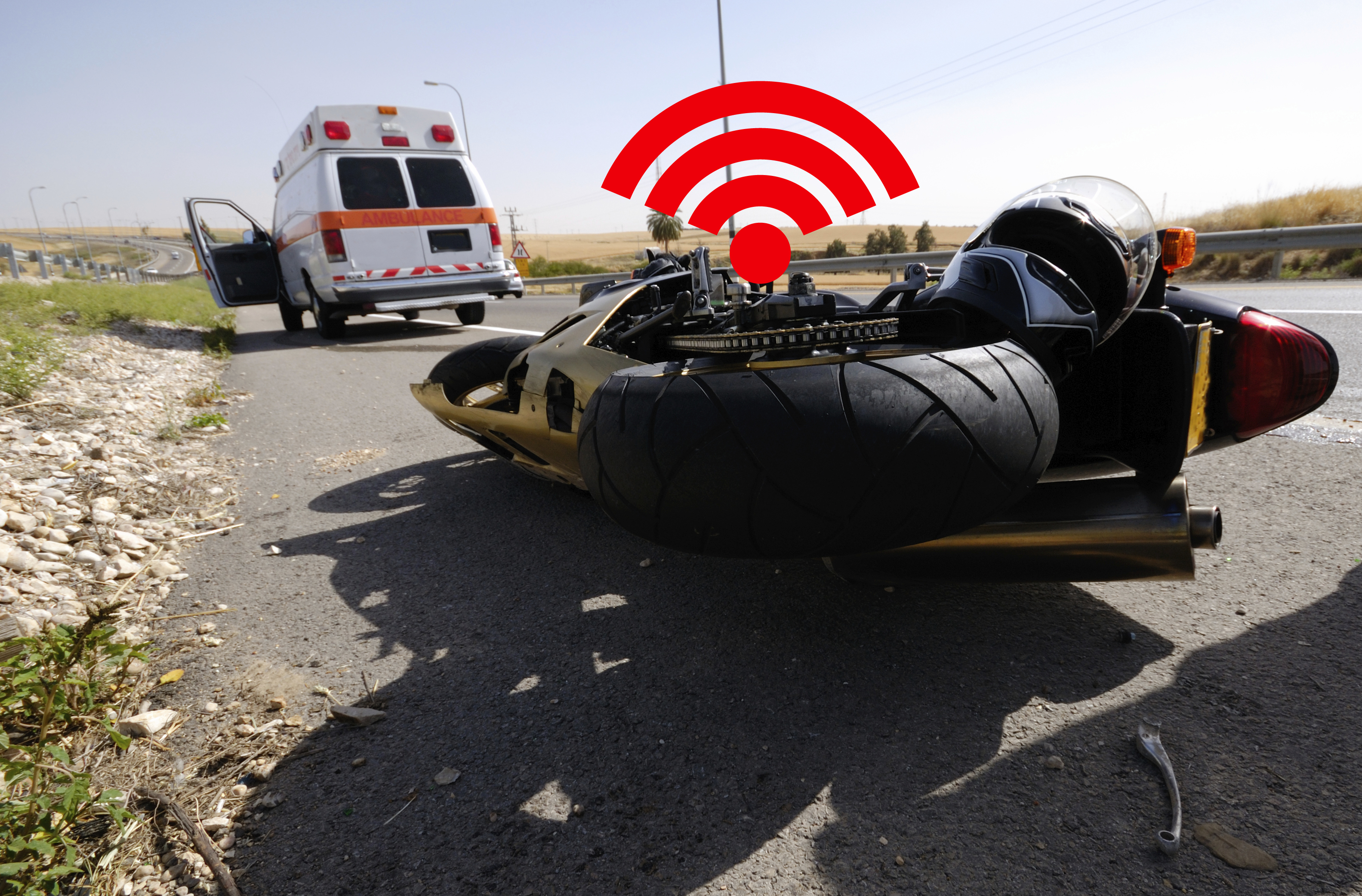

With the built in speakers a rider can listen to music while riding, receive turn by turn audio directions as well as map display, always be ambiently aware of his/her speed, RPM’s and what gear they’re in, and in the event of an accident the HUD helmet will dial out 911 and provide the current GPS coordinates of the rider. Currently many riders listen to music with in ear headphones which is unsafe in the event of a crash. EMT’s will not remove a riders helmet until they’re sure there’s no neck injury, rider may not be able to answer an EMT’s questions if they have earbuds in. In the event of an accident the HUD system will terminate an music being played to avoid this issue. In order to further increase safety and since power is already routed to the helmet it should have integrated LED brake light built into the back of the helmet.
#3 When at the track or riders who like to nerd out on analytics

With the purchase of the HUD analytics app riders can have access to consumer grade racing analytics. The app will track the information streaming from the bikes ECU, things like fuel consumption, revs, speed, lap times, engine temperature, as well as take advantage of the phones GPS, accelerometer and gryoscopes. Information can viewed on the phone and stored on the riders PC/Mac.
Implementation

My motorcycle, a 2006 Triumph Speed Triple, has a normal OBD II ISO port that any generic OBD connector will fit, this data can streamed to a microcontroller through serial cable or bluetooth. This can than be interpreted and sent to the display in the helmet. This is the rough plan at least…
Look and Feel
I have three general ideas of how I can accomplish the HMD
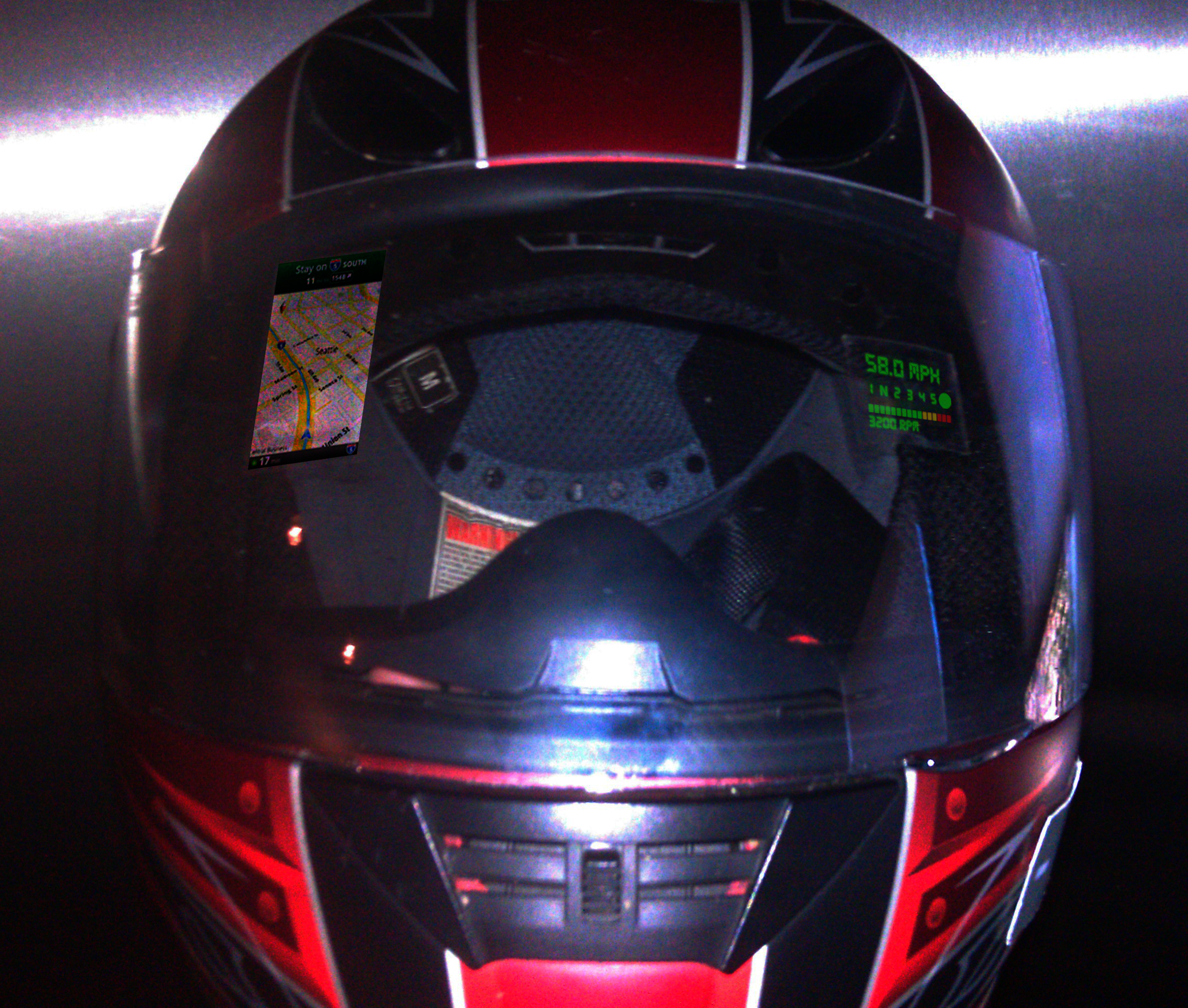
The ideal system to me will project directly onto the visor of a full face helmet so there would be no physical obstructions in view.

The mini display is another option, a very tiny screen tucked below the riders field of vision. A precedent for this are Zeal Optics transcend ski goggles.


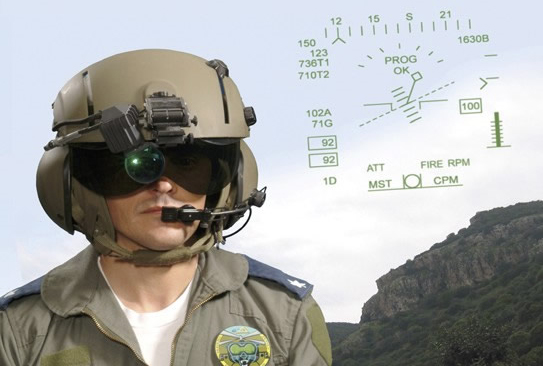
Option three is a monacle style system which would be similar to what apache helicopter pilots use.

 Making Toys
Lee Williams 10:12 pm on March 28, 2011 Permalink |
The easiest thing about prototyping for me is coming up with ideas and roles. I can easily imagine how things should work, what would be cool, and what would make something better, but when it comes to building a physical representational prototype. I often get hung up on materials, size texture, etc. Often I’ll start off treating physical physical things like precious objects and end up failing. Eventually I’ll finally let go and start throwing things together and get moving again.