 Evander Batson
 xinhe feng
 FluffyLeecy
 frankiezek
 gaboratparsons
 giang063
 gracegotlost
 lauriewaxman
 Siwen Li
 Xiaofeng Lin
 Yury Gitman
 mar28th
 Max(TONG WEN)
 Soohyun
 sabotai
 Susan Lin
A lot is going on//Modulos Update

After Prototyping both circuits and look and feel for Modulos (finally it has a name), I started re-thinking what the project was about, finding the soul of my main idea and what differentiates my project from cubelets, Braun electron or Olars. I always been very interested in my role as a product designer in a program where interaction in screen based applications is the main area of research. For my thesis id like to work on techniques and development of materials and manufacture processes for product development. Thinking on technology as a way to enhance aesthetics, performance etc.
Modulus to me is the starting poing of this research where fabrication is as important as the technology. Id like to document the process starting from wood scraps and the use of laser cutter technology. so to explain in an elevator pitch what Modolus is:
Modulos is a modular optical color mixer that uses electronics (inputs and actuators) embedded in wooden blocks.
Modulos is designed to show the product design process of an object with computing electronics from start to end as a way to experiment and research on material properties, physical interactions and production methods.
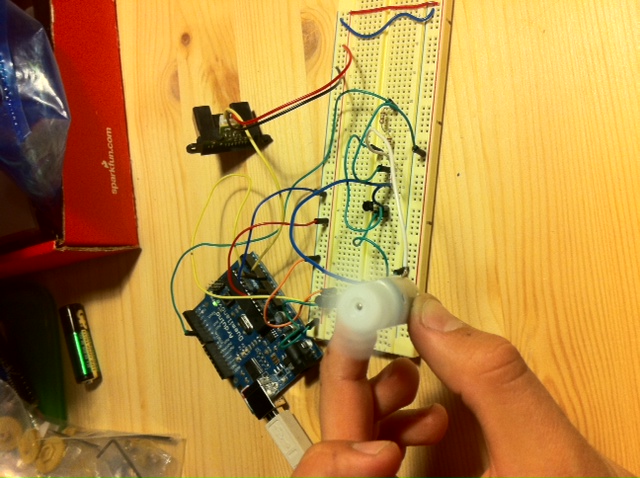
All the circuits and code are working
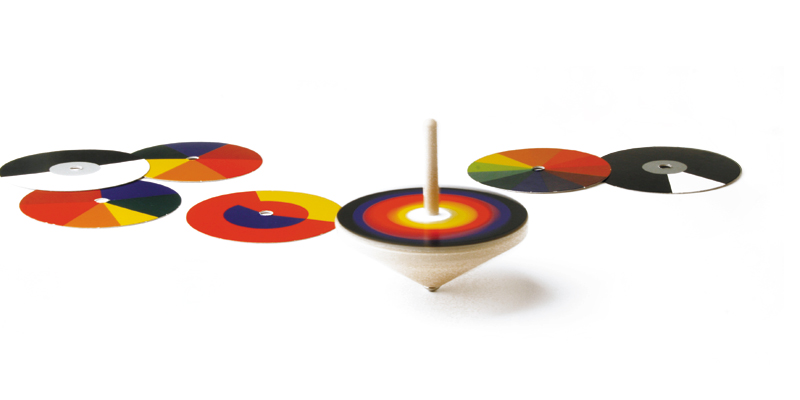
My sketches
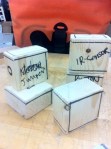

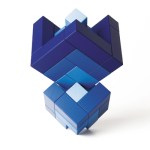

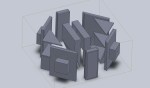
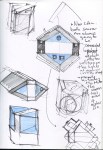


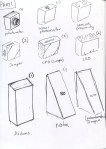


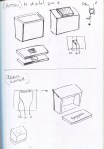
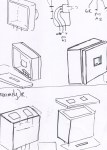

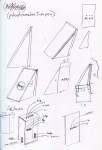
snapshot of the first iteration in 3d

Found prior art on modular toys


SCHEDULE
This Week:
Make the final CAD and 3d drawings for production and documentation
Weekend or end of the week:
start with the construction of the parts
weekend or beginning of next week:
laser cut the connection parts: The connection parts are the faces of the blocks which need accurate dimensions to place the female pins.
 Thom Hines,
 scottpeterman, and 2 others are discussing.
  Making Toys
breegeek 9:37 pm on April 11, 2011 Permalink |
Wow, it’s an ambitious project and it’s already so far along!
Oylum 10:04 pm on April 11, 2011 Permalink |
The documentation is really good. We can definitely see your design process here. You have the circuit and code working which is nice, but things will change when you take the parts out and put them on their own containers. I think you should prototype the implementation on paper cubes, just to see what happens when you take apart that circuit. You can replace the paper cubes with the actual wood ones whenever they are ready and whenever you’re sure your circuits are working perfectly.
I really like this project and admire the way it develops.
scottpeterman 10:07 pm on April 11, 2011 Permalink |
I really like the name alvaro and looks like you’re making some great prototypes. Already, just from your photos, you can really see that the blocks are going to have a sense of heft, of actual, “block”-y weight. I wouldn’t worry too much about differentiating yourself from the prior art you cite, your project is unique in its very handmade/piece-of-craft nature, though those are great inspiration (and I want to play with all of them)
andywallace 10:13 pm on April 11, 2011 Permalink |
Not to reiterate what everybody else said, but this project is really interesting and looks like it’s shaping up to be something really cool and sleek.
One thing, though, is that your elevator pitch is kind of confusing, at least for me. It has a lot going on, and I wasn’t clear if the project was the final object or the process and its documentation. Just something to think about when explaining what the project is.
Thom Hines 10:15 pm on April 11, 2011 Permalink |
This has always been one of my favorite projects in the class, especially since we have been focusing so much on toys this semester. Bridging the analog and digital gap is tricky, especially in a novel way, and the real winners in the area manage to make you forget that you are dealing with either.
It’s hard to get a very specific sense of your implementation from just the sketches alone, although you have done plenty of work on them and perhaps they are perfect to help you guide your thoughts. It is great to see you trying out various forms in your drawings, and you should push it, but I hope you don’t lose track of your target audience. Simplicity in design can be a major strength when the underlying principles may be harder to grasp.
That said, I totally think you are right about the materials being a key part of your project. These things are completely tactile, and so even if a user had no idea what these blocks could do, they should be a pleasure to touch and hold on their own.
As for role and differentiating yourself from the precendents you showed, I would think about how you could make it more intuitive to work with, where there is essentially no ‘wrong’ way to do it. Find ways of introducing relationships between ALL the blocks, so that any two blocks can make something happen. If this is for kids, it should be fun right out the gate.
Also, I ran across this a while back, and I just thought about it in relation to your project. http://www.technologyreview.com/video/?vid=365
Good luck, man!