Recent Updates Page 25 Toggle Comment Threads | Keyboard Shortcuts

  • Unknown's avatar

    Yury Gitman 6:35 pm on May 10, 2012 Permalink | Reply  

    Major Studio: Project Written Doucmentation 

    Prepare a PDF documenting your work.

    Written Documentation Guidelines:
    This document will be composed of the following sections.

    +  A Thesis Sentence and Thesis Paragraph:  One sentence that summarized the big picture of the project.  This is located in on paragraph that expands on that one sentence.
    +Summary: a narrative description of the project:  What is it, who is it designed for, what is it designed to do, what kind of technology, design, or culture does it explore, etc.

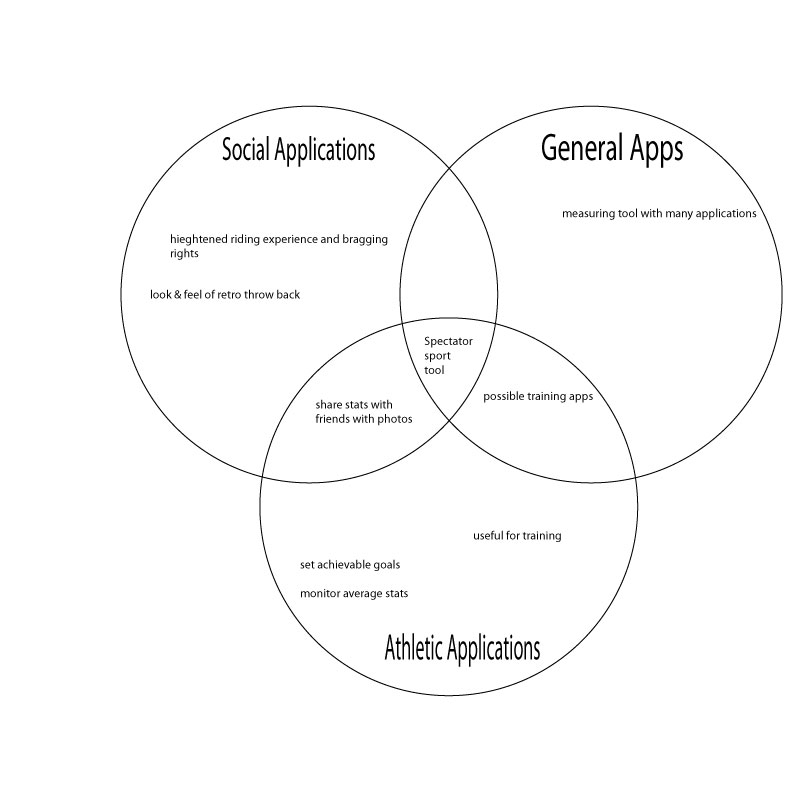
    +Domains:  What are the domains with which your project engages? What relationships exist between these domains? Use diagrams.

    +Precedents:  What are examples of work that share something in common with your project? These precedents can be contemporary or historical, can be drawn from the realms of design, technology, sociology, psychology, etc. In preparing this section of your document, please include the following information for each precedent discussed:
    • title of work and author/designer/artist
    • brief description of project
    • relevance/relation of the project to your own work

    +Iterative Design Process and User-testing:  A narrative description of your process, prototypes, user-testing, key methods and discoveries, sample sketches, storyboards, diagrams, etc.

    +Evaluation: the Evaluation section of your document has three parts:
    • a narrative summary that outlines your thoughts on the strengths and
    weaknesses of your project.
    • a list of criteria that you are using to evaluate the quality of your project. These criteria will be shared with the critics during your final presentation, and will serve as the basis for feedback during your review.

    • a summary of feedback you received during your final project presentation.

    Future Directions: Summarizes what step would be taken if this project would be continued in the future. This should be written absolutely last, and after final presentations.  Use photo-shopped images if needed to communicate future visions.

    +Bibliography, References, Resources: a list of important works used to guide your project. Bibliographic information should include the title of the work, author(s), publication date, publisher, and pages cited.

     
    • best seo reseller's avatar

      best seo reseller 10:35 am on June 27, 2013 Permalink | Reply

      “Zune as well as iPod: Most folks compare the actual Zune to touch, but right after seeing how slim and surprisingly tiny and light it really is, I consider it to become a rather unique hybrid which combines attributes of the two Touch and the Nano. It’s extremely colorful along with lovely OLED display is a bit smaller as opposed to touch display, but you itself feels quite a bit smaller as well as lighter. It weighs in at about 2/3 the maximum amount of, and can be noticeably smaller in width and level, while being just a hair thicker.”

  • Unknown's avatar

    Joe Volpe 6:45 pm on May 8, 2012 Permalink | Reply  

    Final: Making Wireless Toys 

    As of now my project is named “flow”. It will be a device that tracks height and rotation for bmx riders. Some day I hope this device will be developed further to track an extensive library of bmx tricks.

    Look and Feel Prototype:

    1.
    This device will be mounted on the down tupe on any bmx frame. This is the ideal placement due to it being the point of least contact during riding and other bmx tricks.

    The electronics for the device will be imbedded into this foam pad that will be wrapped in decorative fabric. Not only is the padding practical but, the padding holds a nostalgic feeling to most riders and will be a retro throw back reference to the younger days of freestyle bmx of the early 1980’s.

    Role Prototype:

    1.
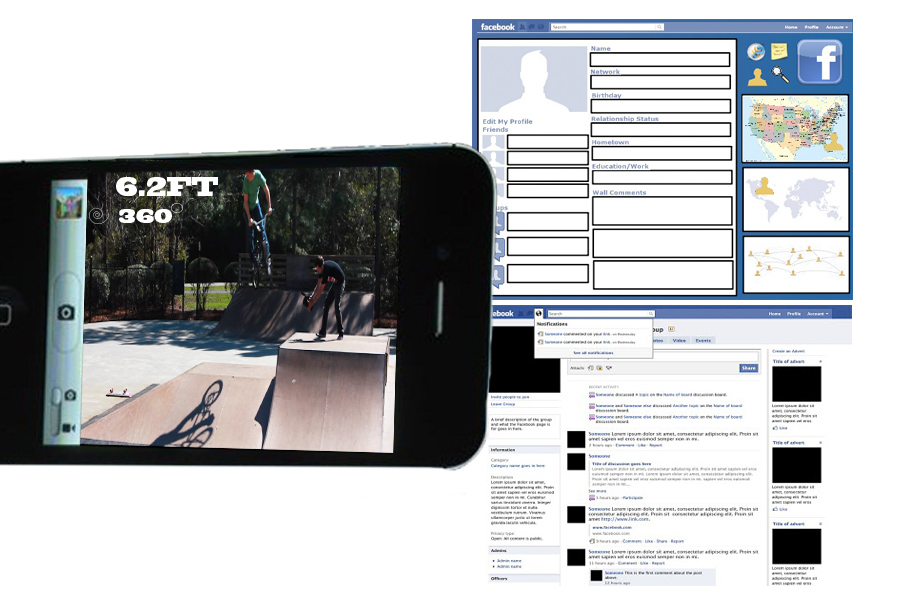
    In the role involving the average consumer, I imagine this product being used as a way to document tricks and rider progression and sharing it on line.

    2. I also can see a role being used in conjunction with a video camera app or camera app on smart phones to aid this documentation, sharing, and user experience.

    3.
    My last predicted role, this product could be used during televised competitions to create athletic statistics. A rider’s average speed, height, and rotation could be documented and displayed in a news ticker during the competition.

    Future Prototypes:

    1. I imagine that this will built as a smart phone app,to work with the sonic range finder, as smart phones do possess most of the necessary hardware to achieve this. I am just concerned about physical placement of the phone on the bike or the body of the rider, and types on phones varying in too much of a degree for it to be widely accepted.

    2. My second implementation involves actually building the electronics using arduino. I would like the arduino to transmit the athletic statistics to a smart via blue tooth.
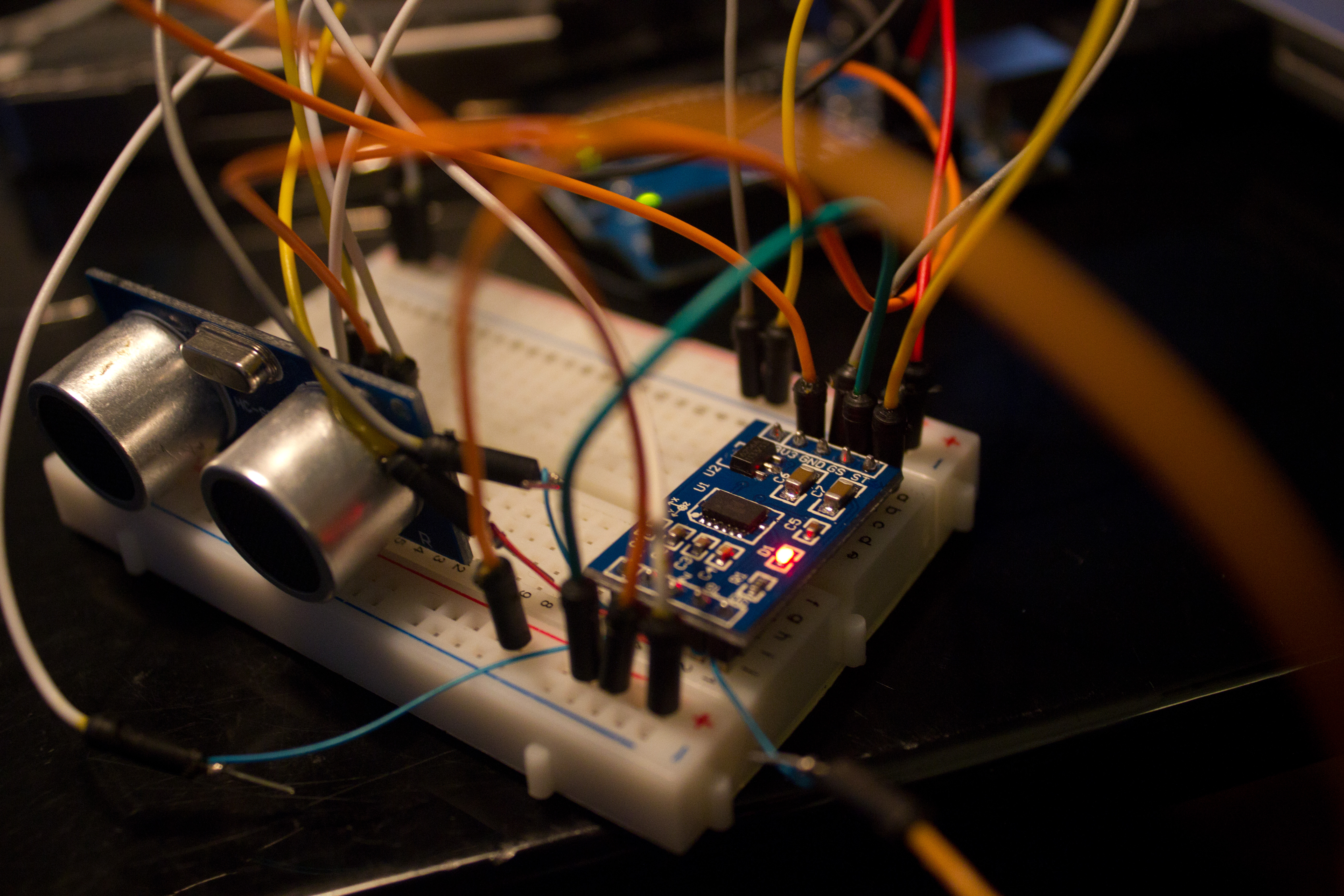
    I have already begun to test out a variety of sensors for this project. The height from the ground information will be gathered using an ultrasonic range finder, and rotation will use a combination of accelerometers, composes, and gyros. All of this will need to by gyroscopically mounted to the down tupe the bike frame.

    Precedence:

    1.
    Sports Bio Engineering PhD student Tristan McNab plans on developing iphone software to track athletic information during track and field sports .

    also here is a link to an array of athletic uses for various sensors http://wockets.wikispaces.com/WirelessMonitors

    2.

    3.
    http://www.revolights.com/

     
    • Saul's avatar

      Saul 5:14 pm on May 1, 2013 Permalink | Reply

      It’s very straightforward to find out any matter on net as compared to textbooks, as I found this piece of writing at this website.

  • Unknown's avatar

    naterudolph 11:31 pm on May 7, 2012 Permalink | Reply  

    Fish Freedom Trailer 

     
  • Unknown's avatar

    adamsabh 10:32 pm on May 7, 2012 Permalink | Reply  

    Quick Notes 5/7 

    1. My project is an audio to visual interactive installation meant to prompt users to be as loud as they can in support of their community (aka sports team).

    2. Big findings during the evolution of my process.

    1. People are not as observant as I gave them credit for before I started my project

    2. People find comfort in large groups to perform “attention-calling” actions.

    3. It is hard to stop people to interact with a project when there are tickets and a time constraint involved.

    3. My project is different than the already existing audio to visual interactive installations during a sporting event because it transfers data instantaneously, is in real-time, and is a TRUE direct correspondence of audio and visual.

     
  • Unknown's avatar

    naterudolph 5:25 pm on May 3, 2012 Permalink | Reply  

    Rasberry Pi 

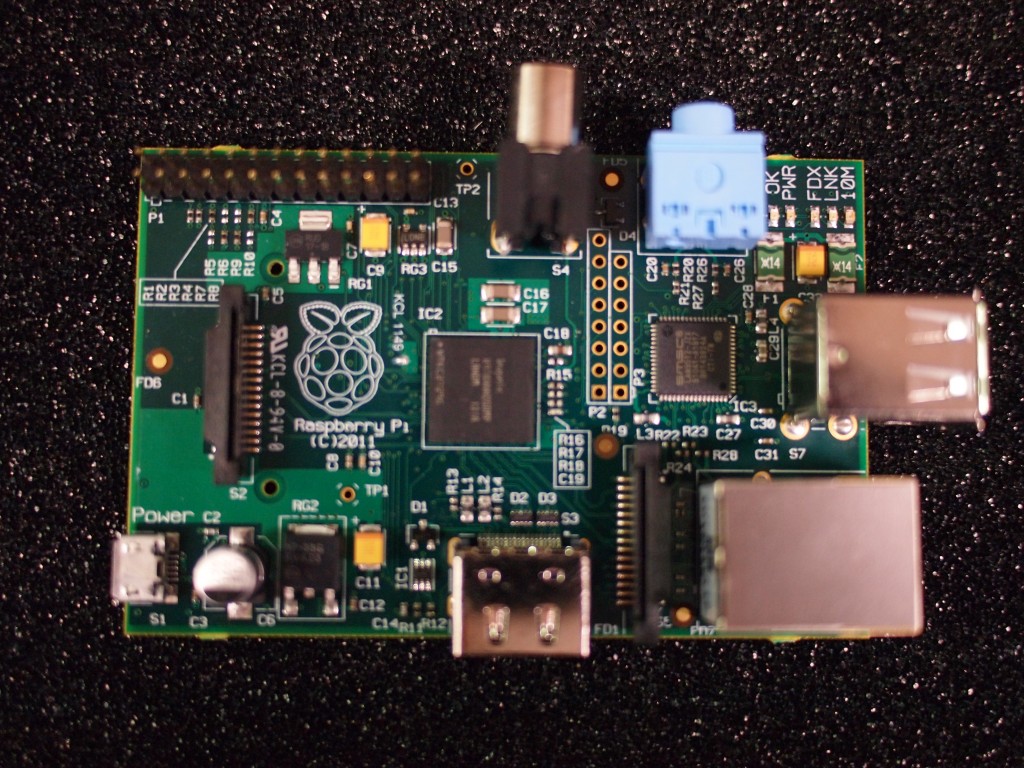
    Anyone else on this site would probably also find this really, really interesting. It’s like a miniature computer, or a super powerful Arduino. For 25 bucks! It runs on Linux from what I’ve seen, but I don’t think you can buy one just yet. Looks like the kind of thing we’ll all be using in a couple years though:

    http://www.raspberrypi.org/faqs

     
  • Unknown's avatar

    naterudolph 6:31 am on May 2, 2012 Permalink | Reply  

    Fish Freedom: Car Test 

    It moves!

     
    • Mike's avatar

      Mike 6:28 pm on May 6, 2012 Permalink | Reply

      Nice! Looks like that fish has things to do somewhere.

  • Unknown's avatar

    Yury Gitman 7:21 pm on May 1, 2012 Permalink | Reply  

    Final Documentation Video Requirements [Making Toys] 

    Create a 45-120 second Video that includes:

    1)
    Title and Your Name

    2)
    One Sentence Description

    3)
    One Paragraph Summary

    4)
    Demo item stand-along

    5)

    Demo item with users

    6)
    Slide of Iterations/ Prior Art inspirations [Biggest Findings, Differences from Prior Art]

    8)
    Future Directions,
    Image(s) and List

    9)

    Your Name. Project Name

     
  • Unknown's avatar

    Yury Gitman 1:28 am on May 1, 2012 Permalink | Reply  

    Major Studio Final Presentation Slides 

    1)
    Title and Your Name

    2)
    Thesis, Sentence –  One Image

    3a)
    Thesis Paragraph, Image, Statement

    3b)
    Demo (or Demo Video) 20-60 seconds

    4)
    Domains

    5)
    Precedents / Prior Art

    6)
    Iterations of prototypes [Biggest Findings, Differences from Prior Art]

    7)
    Hands-On Interaction 60-120 seconds.

    8)
    Future Directions,
    Image(s) and List

    9)
    Questions for Guest Critics, you’d like feedback on..

     
  • Unknown's avatar

    Joe Volpe 7:49 pm on April 27, 2012 Permalink | Reply  

    Thesis Draft 

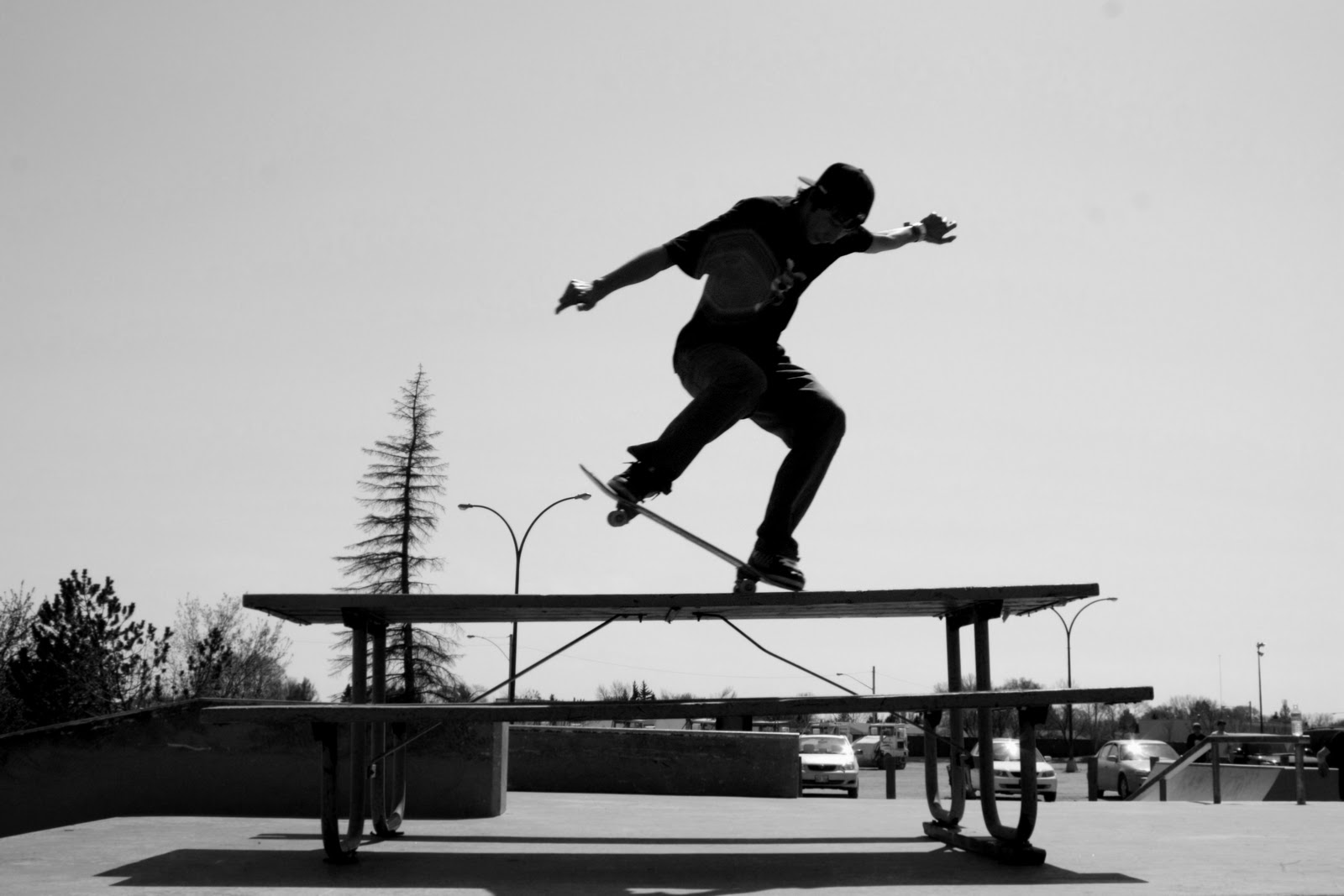
    Designed with freestyle skaters in mind, Skate Signal is partly a safety device, and partly a stylistic add on, and partly a training device. Skate Signal will be mounted with an ardiuno board,an accelerometer, and an array of LED lights that will illuminate on as the board flips and tilts. Like turn signals on a car the led lights mounted underneath the board can also be used to signal the direction the skate board is steering. On the top side, the nose of the board will be fitted with an array of lights that will illuminate at individual orientations when the board is tiled upward, as during certain tricks such as manuals or nose manuals. This is will aid the rider in finding his or her balance point while skating.

     
    • Joe Volpe's avatar

      Joe Volpe 10:13 pm on April 30, 2012 Permalink | Reply

      list 5 questions you would ask the perfect guest critic, What do you want feedback specifically?

      I want feedback specifically on implementation and the perfect critic would be someone like Tony Hawk.

      questions:

      • How could the design be more seamlessly worked into freestyle skate culture?
      • How could the electronics be placed within the design as to not inhibit the skater?
      • How easy would this be to mass produce?
      • What is more important the visual aesthetic or the practical functionality?
      • How should I market this? Is it worth marketing?
      • Are you hiring?
    • Joe Volpe's avatar

      Joe Volpe 10:15 pm on May 7, 2012 Permalink | Reply

      Second Summary:

      1) Re-Write your one sentence description.

      “Skate Signal” is designed with freestyle skaters in mind as a training application and stylistic addition to their boards that responds to the boards movements.

      2)list 2 “big findings” that came out from the evolution of your protoypes.

      • learning to work with and program accelerometers.
      • upon researching this, I have devised a system I will further develop to track skate board flip tricks electronically with minimalist hardware attached to the board.

      3) list 3 differences with your work from that of prior art.

      The prior art I have discovered as done two things. It has either mounted lights on the board and ignored what the free style skateboard is used for, or the creators focused on the tricks of skaters but have mapped them and placed the electronics in hopelessly poor places on the physical board while using an abundance of cumbersome electronics.

      My work hides the electronics of the board keeping it useful to the freestyle skater while adding aesthetics and sporting applications. At this time, I have also kept my electronics to a minium, relying on one microcontroller, one accelerometer sensor, 9 leds, and one coin cell battery.

  • Unknown's avatar

    naterudolph 10:48 pm on April 26, 2012 Permalink | Reply  

    FishFreedom Thesis Draft 

    A few thesis statement drafts:

    FishFreedom is a device that gives pet fish mobility.

    FishFreedom is a device that gives pet fish the ability to move their own environment.

    FishFreedom is a response to the shackled nature of a traditional aquarium, giving pet fish the ability to control the movements of their environment.

    FishFreedom is a device modeled after the “Hampster Ball” that gives fish the ability to traverse across a room.

    REVISION:
    FishFreedom is a mobile platform that allows a pet fish to control his movements across a room.

    ———
    Using a webcam with color tracking software to provide navigation, two servo motors drive a vehicle that houses the fish tank and power supply. The webcam provides a constant feed of where the fish is located in the tank and drives the fish in the appropriate direction, giving the fish the ability to decide the direction and speed of the vehicle’s movements.

    ———

    Big finding 1: Capturing the exact angle and movements of the fish’s position in the tank really isn’t as important as having smooth motion. Just seeing it move back and forward was such a magical kind of movement, enough that I didn’t even remember that I had wanted it to be precisely accurate.
    Big finding 2: Getting the servo motors to work synchronously was much more difficult than I had assumed it would be. Through a series of several rebuilds of the car I’ve tried to realign the wheels and secure them with hot glue, but I still have had trouble getting them to match each others momentum. As far as I can tell it must be a mechanical issue, because I feed both motors the exact same code and yet one wheel always seems to be dominate and cause a turn when I try to do a straight line. Lately I’ve been trying to correct this via the code, and I think I’ve finally found a sweet spot that gives me a moderately straight line over the span of a few feet.

    ———

    AirSwimmers: (Similar in that I’m trying to mimic the movements of fish. Different because I’m using an actual fish.) For a future iteration I’d like to build in a system that could actually emulate the swaying motion of fish’s fins.

    HamsterBall: The main precedent because I went into the project wanting to make essentially the same thing only with a fish.

    Project413: A hamster ball with a hacked motor system that allows wireless control of a mobile sphere.

     
  • Unknown's avatar

    normandiaz 10:47 pm on April 26, 2012 Permalink | Reply  

    Interactive Architecture Thesis Draft 

    My project is focus in a spatial design, data processing and automated reasoning.

    This space could be used for different purposes but mainly after working on the design I think it can be used primarily  as an art pavilion. The facade of this pavilion will move and will process data that can be deducted by the inhabitants of the space. Also the lightning design of the project will represent data of the place.
    —————————————-
    ———————————————————————

    STATUS CORIUM

    I came with a name for my project: STATUS CORIUM which are 2 latin words that mean:
    STATUS: A state, condition or situation
    CORIUM: Skin layer
    I think the name its a great aproach to what my project means.

    1) My project is a scale model of a spatial design, which processes data and adapts to its environment by transforming its shape.

    I believe buildings in a near future will move and adapt to the environment in which they are located at and this will improve the experience of the inhabitants of it.

    2) The materials that I’m using now changed a couple of times to be able to represent what I have in mind.

    The mechanism and they way I’m making things move changed a lot.

    The motors that I’m using changed, from servo motors to DC motors.

    3) Ive seen similar prior art like the woodman projects, and other parametric architectural design projects.

    I believe my project it is a vision of what the future of architecture will be.

     
  • Unknown's avatar

    mikesusol 10:46 pm on April 26, 2012 Permalink | Reply  

    WagerBall Thesis Draft 

    Thesis Sentence draft 01: This project will be a mashup of a traditional mechanical tabletop game that explores the boundaries of wagering and transactional socialization by utilizing real-time digital feedback.

    Thesis Sentence draft 02: Wagerball is a tabletop soccer penalty kick game (in the tradition of foosball) that uses various digital sensors to track, log and report gameplay status and scores.

    Thesis Paragraph draft 01: This project will use a Soccer penalty kick scenario to invite player interactions. Allowing players to “commit” to a “bet” via a third party application and using digital feedback directly related to the outcomes will create an opportunity to observe the social patterns of wagering with digital funds vs. real world cash. Will players feel compelled to bet more money at a higher frequency once they have the ability to complete a transaction online using digital currency, coins or other rewards or will they choose to use discretion as if they were playing with real money? This is a question I hope to answer after watching players interact with my project.

    List 3 “big findings” that came out of the evolution of your prototypes: 1) The mechanical elements need to be scaled properly to ensure fairness in the play experience, specifically for the goal keeper. 2) Asking the defender to change the arm positions of the goal keeper prior to the penalty kick adds an element of chance. 3) Adding a “shot clock” increases the pressure on the shooter and simulates the stress of a real penalty kick situation.

    List 3 differences between your work and that of prior art: 1) My project combines mechanical gameplay with digital sensing whereas most tabletop games encourage purely physical play. 2) My project connects chance, skill and digital wagering. 3) My project can be configured and presented as a DIY project.

    •••••••••••••••

    5 Questions I would Ask the Perfect Guest Critic:

    1. How could I improve the form factor of my project?

    2. Do you think I should allow the defender to move the goalies arms up and down in real time?

    3. Do you know anything about wagering and gambling laws and regulations in the United States and abroad?

    4. How could you see this being played? By what age group and in what environment?

    5. Do you like the simple retro sounds and gameplay mechanics or should I strive for more realism (e.g. chanting crowds, music)

    I would love to get feedback on the playability of my game and my exploration of wagering dynamics.

     
  • Unknown's avatar

    christopherkoelsch 10:40 pm on April 26, 2012 Permalink | Reply  

    A Voyeuristic Journey that weaves a narrative around… 

    “A Voyeuristic Journey that weaves a narrative around the form of a house.”  The user becomes a/the voyeur  by peering inside windows of a house wrapped with allusions to an historical happening/crime.  By sequentially peering/entering the front door, the voyeur tries to catch a glimpse of its moving inhabitant all the while having her protest about being watched.  The narrative is flipped at the conclusion as the user/voyeur becomes the victim.  Which windows/path the voyeur will need to follow be indicated  by exterior lighting.

    1.  Do you feel this project takes you anywhere in terms of a narrative/how is the structure of the narrative?

    2. What is the experience you feel from this project?

    3.  Do you feel the facade is superfluous/”been done”/too indulgent?

    4. What do you feel about the interactivity’s effectiveness?

    5. **What do you think of the construction?

     
  • Unknown's avatar

    aisencc 10:37 pm on April 26, 2012 Permalink | Reply
    Tags:   

    Pop Matrix "Thesis Draft" 

    Pop Matrix is a new kind of pop art. This device displays images on your tongue through a series of electrodes. Using sensory substitution, the device trains the user’s brain to translate tactile to visual information will begin to see the images displayed on their tongues.

     
  • Unknown's avatar

    normandiaz 9:36 pm on April 26, 2012 Permalink | Reply  

    Interactive Architecture (Update) 

    Spatial Design

    Data Processing

    Automated Reasoning

    This slideshow requires JavaScript.

     
  • Unknown's avatar

    KB 7:53 pm on April 24, 2012 Permalink | Reply  

    RF Documentation 

    VirtualWire-1

     
  • Unknown's avatar

    aisencc 8:54 pm on April 23, 2012 Permalink | Reply  

    electric pop 

    electric pop
    This is the first prototype of the electric pop. The second phase is to run the code on it and *fingers crossed* hope it works. Craftmanship was done with patience, so there is hope!
    The other issue is the rights to this work. Beta tank created a look and feel prototype for this device, the idea of this device belongs to Bach-Y-Rita, and Hoeken has open-sourced his hardware and software maps, which leaves me as an integrator. Measuring up all the cooks in this kitchen I am becoming a bit uneasy about following this project– suggestions?

     
  • Unknown's avatar

    aisencc 5:56 pm on April 22, 2012 Permalink | Reply  

    Wow! Society is moving in the right direction! People want to prototype micro controller projects so much, there is an opportunity for counterfeit merchandise! Hurray!!! LV, Coach and broke fashionistas- Electronics and open source hardware is what’s up!

    • Just the optimistic side of things…
     
c
Compose new post
j
Next post/Next comment
k
Previous post/Previous comment
r
Reply
e
Edit
o
Show/Hide comments
t
Go to top
l
Go to login
h
Show/Hide help
shift + esc
Cancel