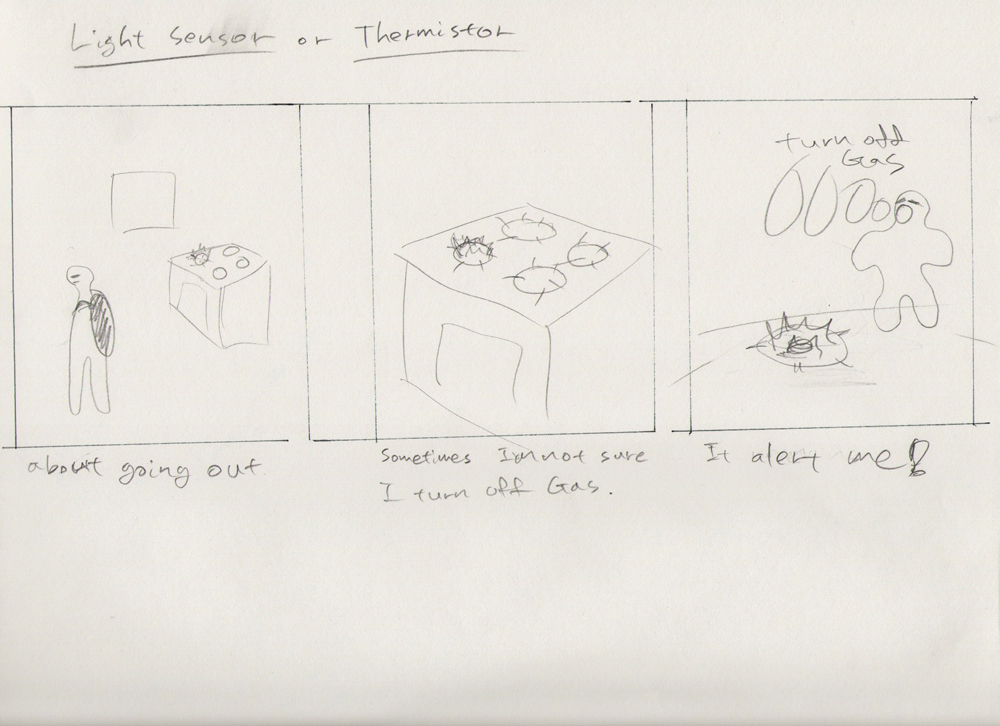
Updates from February, 2011 Toggle Comment Threads | Keyboard Shortcuts

  • Unknown's avatar

    catherine 10:25 pm on February 10, 2011 Permalink | Reply  

    Project Concepts 

    My friends have yet to be name. 😦

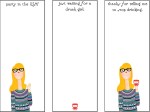
    Concept one: Do you think you have had enough too drink? This plush keychain friend has a built in breathalyzer. He will yell at you when you are almost/are too drunk. All you have to do is kiss him.

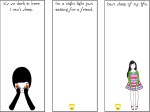
    Concept two: Are you afraid of the dark? This plush will serve as a night light! It lights up when the room gets dark and matches your heart beat for a soothing night of sleep. This friend will give you the best sleep ever!

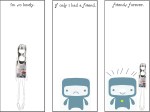
    Concept three: Are you lonely? When you hug this plush, he lights up and vibrate for that human feel. Simply touch him and he’ll go crazy with love. If you leave him too long, he’ll whine.


  • Unknown's avatar

    hilalkoyuncu 9:43 pm on February 10, 2011 Permalink | Reply  

    Companions 

    For my companion project I have three characters: the wingman, mini-me and the yogi.

    The wingman:

    The wingman goes out with the user to bars and helps her/him pick up boys/girls.

    The user will be wearing a wrist band that has a GSR which will communicate with the wingman and let him/her know that the user is psychologically and/or physiologically aroused. The hall effect sensor on the wingman will determine if there are any people close to the user when GSR is on, if there aren’t people around it will make flirty noises and lights to draw attention to the user.

    Light sensor will help the wingman to be louder/ more aggressive with its audio/visual responses assuming that the user is in a dark and loud place (a club) to draw attention more effectively.

    The wingman will stop interacting once the proper proximity between the user and a person is achieved.

    Mini-me

    Mini-me is a clone of the user, it experiences what the user experiences physically and responds to the user depending on how the user treats her/his body.

    Mini-me has a motion detector and a light sensor and he/she sits on the user’s bed to determine the sleep cycle of the user.

    The user is wearing a bracelet that has a pulse sensor and a smoke detector to detect wether the user smokes and exercises.

    When the user comes home the data from the bracelet will be transfered to mini-me via a wireless connection.

    Depending on how the user treated her/his self mini me posts a status update about the user/ itself(since its a mini version of the user:) on facebook.

    The Yogi:

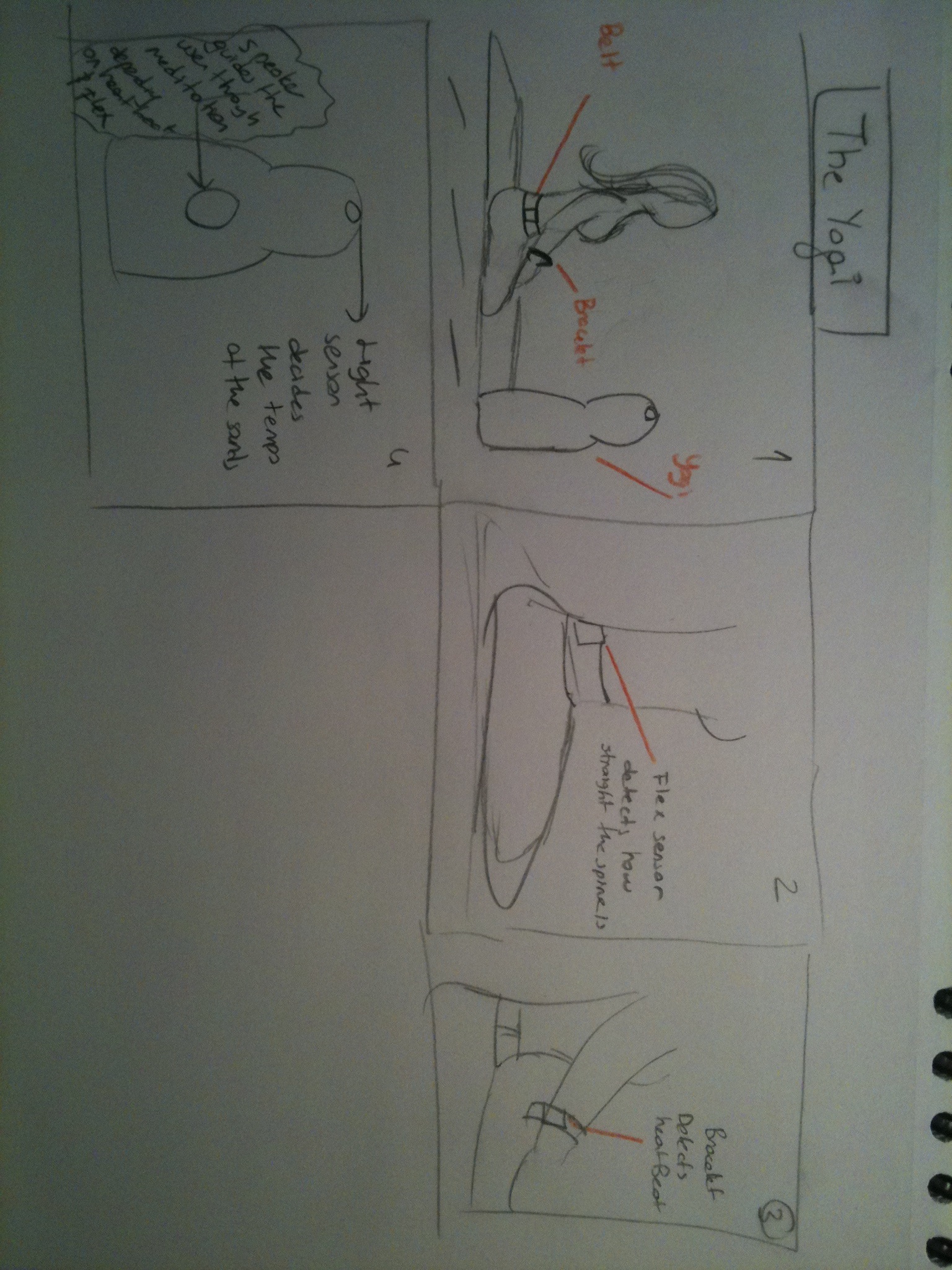
    The  user will be wearing a belt with a flex sensor and a bracelet with a pulse sensor or a GSR.

    The flex sensor is in charge of determining if the user’s spine is upright, to establish a good flow of energy throughout the body. The pulse montior/ GSR will determine if the user is in a calm state and is breathing correctly.

    The yogi has a light sensor  this will alert the user to dim the light to create a better ambience for meditation and it will go off again to alert the user that the meditation is over .

    The yogi will give the user directions for her/him to keep a nice spine and to breath properly to achieve a good meditative state.

    The yogi will respond with sound only.

     
  • Unknown's avatar

    scottpeterman 9:14 pm on February 10, 2011 Permalink | Reply  

    Three Critters 

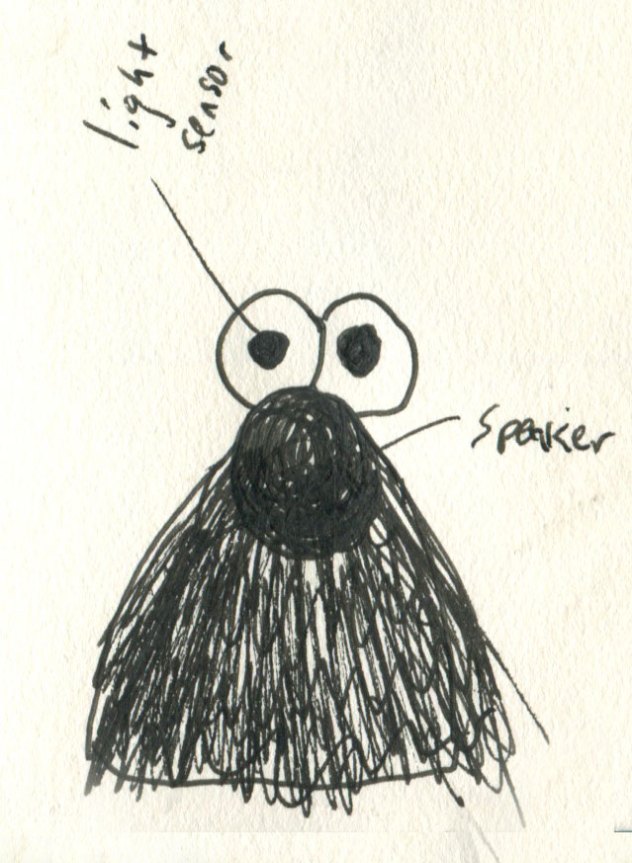
    Cabinet Guy

    cabinetguydetail

    Cabinet Guy is a small bot. He has two big eyes, one of which is a photocell. He also has a big, cheap speaker for a mouth. He’s kind of the digital equivalent of a Honker:


    (More …)

     
  • Unknown's avatar

    thisisvictorkim 9:00 pm on February 10, 2011 Permalink | Reply  

    User Scenarios 

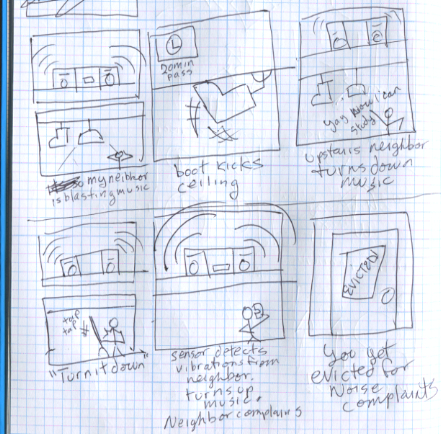
    Idea one would be a Boot attached to your ceiling that would detect an increase in sound/vibration coming from your upstairs neighbor.  when your neighbor leaves their music on a loud volume for a period of time the boot kicks the ceiling.  conversley there would be sensor attached to your floor that would sense taps coming from your downstairs neighbor.  once these taps are sensed the sensor tells your speakers to TURN IT UP.  neighbor calls landlord, you get evicted.  I feel like the vibration and taps can be detecte using perhaps a force or perhaps motion sensor in conjunction with a microphone.

    Idea two is a motion sensor you attach to your feet and to your dog, sort of like a pedometer to detect how much you’ve traveled in a day and compares it to how much your dog has traveled in a day.  at the end of the day you and your best friend check your stats and the winner gets a treat.

    Dr Love Bug helps you set the mood when it’s time to get intimate.  Scenario would be you meet someone you want to have a one night stand with at the discotheque, take them home, and turn on some warm colored lamps as mood lighting.  Dr Love Bug senses this change in light using photocell and color sensors and locks your door, pulls down the shades, and turns on some Marvin Gaye. oooooh babayyyyy!

     
  • Unknown's avatar

    Thom Hines 8:59 pm on February 10, 2011 Permalink | Reply  

    Sensor-Based Roommates 

    As part of our mid-term projects, we were tasked with creating three creatures that could live in our houses and fit into our lives. They had to use a sensor (including at least one photoresistor), and they had to encapsulate at least some aspects of what defines a living creature. Here are the three I’m came up with.

    Hey Tony!

    Hey Tony!


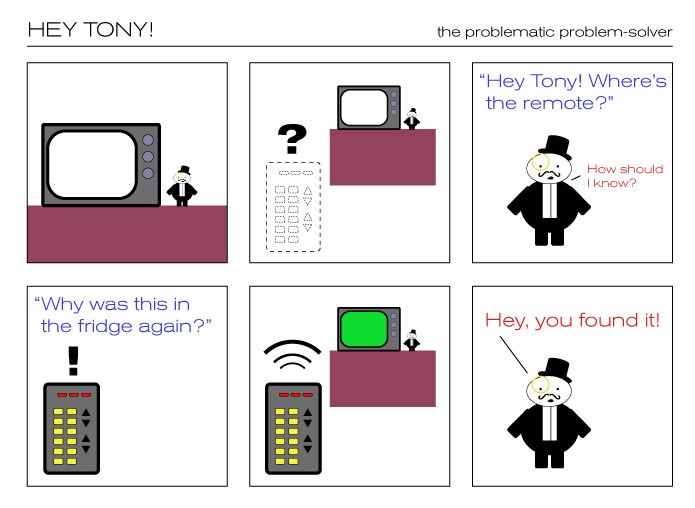
    The idea came to me after thinking about having a creature around the house that could help me find stuff that I occasionally lose. Things like keys and remotes were obvious examples. When I saw there was an IR sensor that could be paired with remote controls, it seemed a natural fit, until I realized that you need to use the remote in order to trigger the sensor. From there, I thought, maybe he could just let you know when you’ve already found it, which seemed kind of comical and fun.

    Tony sits by the TV, and if you lose the remote, you tell him. He’ll let you know he hasn’t seen it. However, the next time a remote is used again in his directly, he’ll kindly let you know that you’ve found your remote!

    Grumps


    Grumps

    Grumps is a little critter that lives in your medicine cabinet. He lives there because he is a neurotic hypochondriac, and he likes to be close to his meds. However, locked away in his little apartment, he often falls asleep and forgets that what he is living in is essentially a cantilevered cliff dwelling, and that everyday when you open the medicine cabinet, he gets startled and freaks out, since he is also afraid of heights. For a few seconds, he proceeds to thrash about wildly, trying to grab onto anything that would keep him from falling to his death, until he finally calms down and remembers that he is still alive and in his home.

    At first, I just wanted to make a creature that threw temper tantrums when you woke him up, but his story quickly evolved when I realized what kind of guy he would have to be to live in the medicine cabinet, and how traumatic that could be if you were woken that way.

    CopyCat

    CopyCat

    I have a dog at home, and a big part of having a roommate that I would actually enjoy having around the house, can basically be summed up in a lot of ways by my dog. He basically just wants to be involved in everything going on in home, but he doesn’t require all the effort of keeping up conversation or any social pressure. CopyCat will basically follow you around, speak when people are talking, and get drunk when you are (alcohol sensor), but he never really requires your attention. If you ignore him, he’ll still do his thing, and when he does, it just reinforces how important your actions are. It feels comforting.

     
  • Unknown's avatar

    Chris Piuggi 8:22 pm on February 10, 2011 Permalink | Reply  

    Blue Sky Concepts | Creatures that live with you 

    In approaching this challenge I began not by thinking about the creature but about the problem, my thought was that any of these ideas below could be persued and could be incorporated into a creature, be it a bird, bat, monster, or invented type of creature. I found it easier to approach the problem solving first in order to not lose sight of the need in someones life rather than the narrative of the creatures.


    Vaccum Pet

    Vacuum Pet would be a creature who enjoys the light and dark equally. Most of all he loves consistency. Vacuum Pet would charge up in the light, while the vacuum is in use, and then rest in your closet for a week. As you build a schedule vacuum bug would sync into it, and begin to grow unhappy if your vacuuming cycles became less frequent.


    ******************************************************************
    These next two concepts don’t quite have the creature in them yet but
    I feel it could be developed with any creature in mind.

    ******************************************************************

    Kitchen Friend


    Sunshine Helpers

    Sunshine helpers would be a troop of magically inclined creatures who love the sun, and want to share their love of sunshine with you. Sunshine helpers would attach to your blinds and take readings of the amount of sunlight coming into your window. In the morning your blinds will open up bright, and in the evening/dusk they will close, allowing the maximum sunlight to enter you home each day.


  • Unknown's avatar

    Oylum 7:38 pm on February 10, 2011 Permalink | Reply  

    3 ideas 

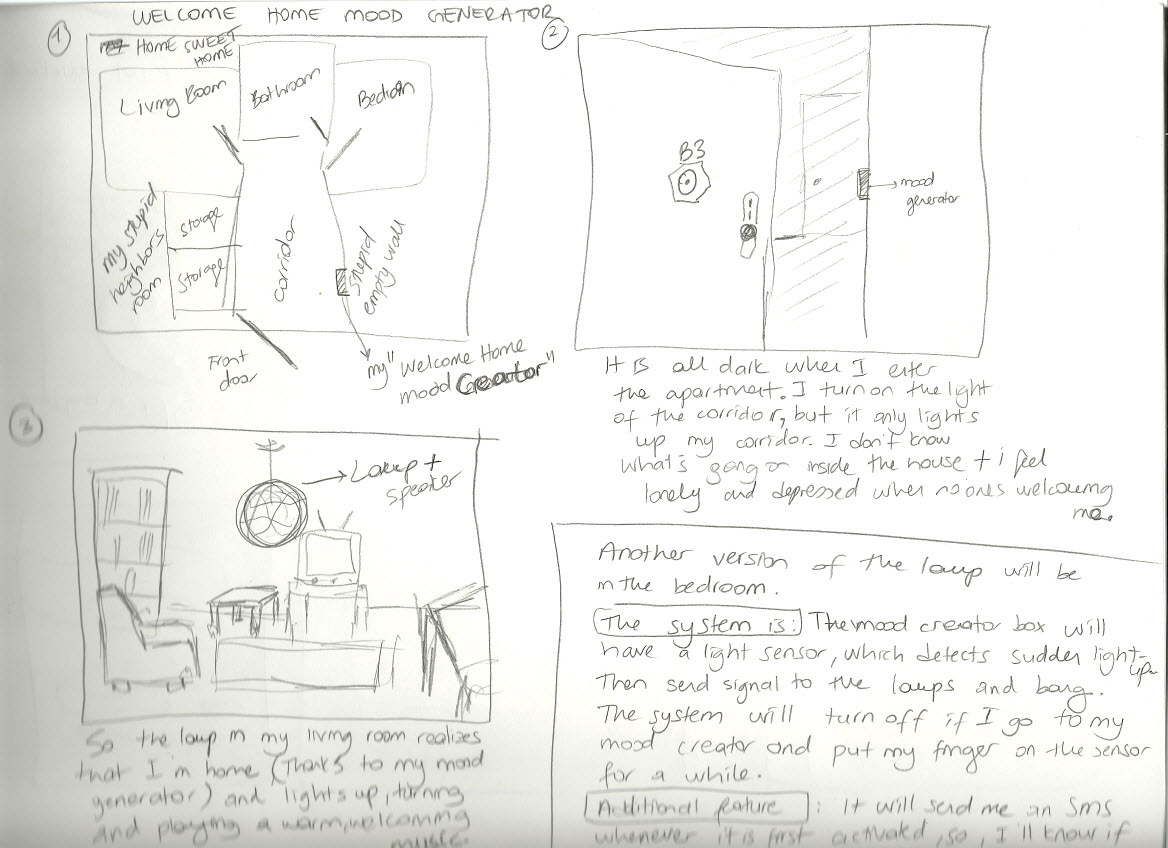
    “Welcome Home Mood Creator”

    I hate the feeling when I come home and it’s all dark, lonely, without any sign of life, except for the possibility of a hidden mice or a thief that I wont see until I turn on that room’s light. So, I decided to make a Welcome Home Mood Creator which will sit on my wall beside front door. It will have a light sensor that detects sudden light-up condition. Then, it will send signals to the lamp in the living room and the bedroom. They will light up, with lovely mixture of colors and a warm welcoming song out of the speakers. If I want to turn them off, I’ll go to my mood creator and cover the light sensor with my finger for a while. Everything will fade out in ease.

    PS. It might have and additional function. It might send me a text message whenever it is activated, so that I’ll know if anyone breaks into my house from the front door. Or I’ll place is so well that it will both detect the light coming from the door, or a flashlight walking around.

    “Kitty Katty”

    A plush cat, that is awake only when we are awake. Wants a hug if not touched for a while. Sleeps and purrs if you hug for a long time. This was my dream cat after my crazy monster cat that I had to live with for 6 years. And my dreams now might come true.

    It will use a light sensor to be awake or to sleep. A pulse sensor or vibration, a pressure sensor to detect hugs and a speaker.

    “Sensitive Pillow”

    My husband loves to sleep hugging a pillow, a huge one, but I hate it cause when the room gets hot he throws it on top of me. Every night, I sleep with a husband and a giant pillow that takes almost half of my queen size bed. So, I imagined a pillow that swells when someone hugs it but shrinks when there’s no one hugging it. It might have a built in alarm clock and a pulse sensor, so that it can vibrate to wake us up in the morning.

     
  • Unknown's avatar

    Lee 6:34 pm on February 10, 2011 Permalink | Reply  

    Three housemates 

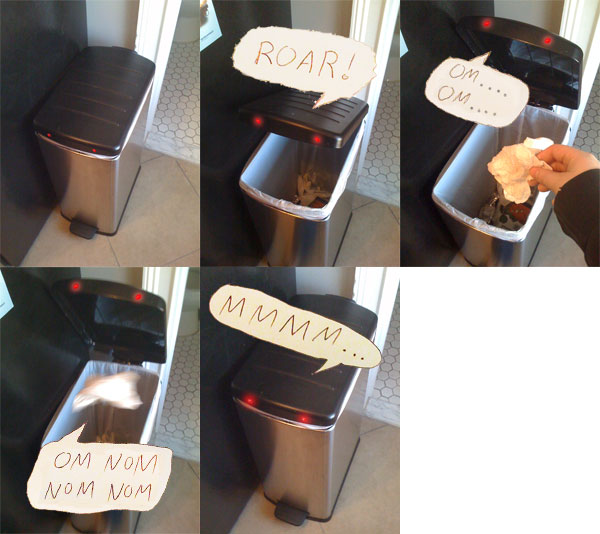
    OM-NOM Garbage Can
    OM-NOM has two LED eyes, a speaker, motion sensor, and is activated by a flex sensor.

    When the lid/mouth starts to open he growls hungrily and his eye’s blink crazily.

    If the mouth stays open and nothing is placed inside he makes OM… OM… noise begging for food/garbage. His eyes blink each time he makes an OM noise.

    a motion sensor detects when an item is placed inside and then OM-NOM enjoys his food/garbage. OmNomNomNomNom, and his eyes blinking repeatedly.

    He’ll continue OmNomNomNom’ing for a little while after the lid is closed.


    Soap-O
    Soap-O has a force sensor, green & blue LED’s and speaker.

    Soap-O hangs out in your shower and holds your soap. When you pick up the soap, Soap-O gets excited, makes a happy noise and his eyes light up green and he starts strobing with blue color.

    When you place the soap back on Soap-O he makes a thank you noise and blinks his green eyes a couple of times.


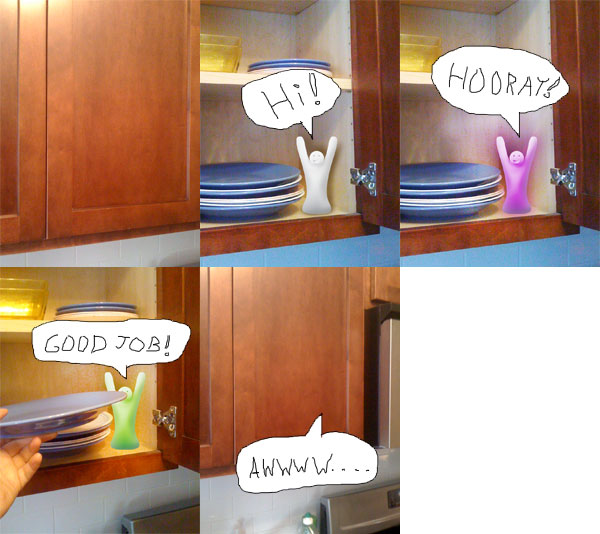
    WoooDude
    WoooDude uses a light sensor, motion sensor, has RGB LED’s and a speaker.

    WoooDude chills out in your cabinet and gets super stoked when you visit him. He’ll make a super happy “HELLO!” noise then strobe different colors and make some happy noises.

    When you put something in or take something out of a cabinet, he thinks that’s pretty awesome and will congratulate you and blink his colors on and off.

    When you close the cabinet again he gets kinda bummed and makes sad “awwww” noise.

     
  • Unknown's avatar

    lpercifield 4:25 pm on February 10, 2011 Permalink | Reply  

    My Three Creatures 

    These are the three creatures that I came up with. After thinking about and sketching them, I really want to make them all!

     
  • Unknown's avatar

    minho 7:01 am on February 10, 2011 Permalink | Reply  

    3 companion ideas 

     
  • Unknown's avatar

    andywallace 6:26 am on February 10, 2011 Permalink | Reply  

    Three ideas for life-like machines 


    1. Cabinet Friend


    Cabinet friend lives inside your bathroom cabinet. He greets you when you open the door, and will generally coo while you are around, but he is also a very curious fellow. If you take a pill bottle or anything else from a the shelf he can see, he will tilt his head to look at it with interest. When the door is closed it can gesture goodbye.

    This could be accomplished by using an IR scanner to get the distance of each item while the person is away and comparing it to the distances when the person is using it. Obviously, this would require a few servos to control the IR scanner and the head.


    2. Fruit Friend

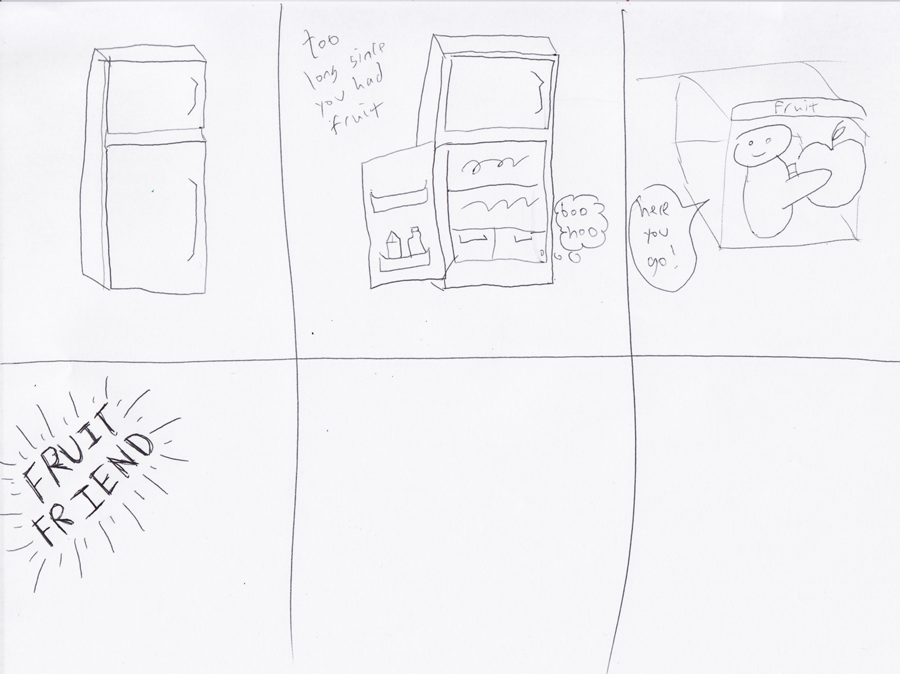
    Fruit Friend likes to hang out in the fruit drawer of your refrigerator. He loves fruit but he also loves company. He can sense when the fridge is open based on the light, and will cry if he has not been visited in a while. If you open the fruit, drawer, though, he will be happy and will offer you a piece of fruit. To help remind you to eat more fruit, you should put the next piece of fruit in his hands so he can offer it to you next time you open the fridge. If you have no fruit and leave him empty handed, he will cry more often, reminding you to get some.


    3. Door Friend

    Door Friend loves to swing on the door. He loves it when people open and close the door and squeals with excitement  when he gets to ride on a swinging door. Of all of these creatures, he is the youngest, and his emotions can be somewhat fickle. If you close or open the door too slowly he’ll get bored, but if you slam the door, he will become scared.

    Door friend would use an accelerometer to tell how fast he is going.


    General Vision

    I see of all these little creatures being somewhat simian in nature, and of course somewhat adorable. They are all playful, and need to have the user want to keep them around, so cute helps. Think baby lemur:


  • Unknown's avatar

    Yury Gitman 3:24 am on February 8, 2011 Permalink | Reply  

    Putting Code into your Post. [sourcecode] tag 

    To embed code into your post, just wrap your code in sourcecode tags:

    Ref Link: http://en.support.wordpress.com/code/posting-source-code/

    It will look like this:

    long randNumber;
    
    void setup(){
     Serial.begin(9600);
    //  randomSeed(analogRead(0));
    }
    
    void loop(){
     randNumber = random(10);
     Serial.println(randNumber);
    
     delay(50);
    }


    • andywallace's avatar

      andywallace 5:45 am on February 10, 2011 Permalink | Reply

      This is great for little bits of code, but I still think it’s way cleaner to just link to your whole code. Otherwise everybody has to scroll past your entire program.

      • Yury Gitman's avatar

        makingtoys 8:45 pm on February 11, 2011 Permalink | Reply

        If we all put the code into the “read more” page break, it will fix what you are describing. We want to actually host the code on this blog, and have it search-able by engines and readers.

  • Unknown's avatar

    andywallace 11:23 pm on February 7, 2011 Permalink | Reply  

    Week 2 Writing Response 

    Original post: https://makingtoys.net/2011/02/07/space-squid-with-lee-williams/

    Prompt:

    1) Explain (in a  nutshell) your code structure, logic, important parts.

    2) What did you do that you feel is new, non obvious, and useful.

    The code works by putting the creature in one of several states, each of which cause a sound and sometimes an addition effect based on how long it has been in that state. There is one additional state that takes precedence over all others: Dead. The behavior of the creature is completely different while it is dead.

    While alive, the creature will either be excited, neutral, or screaming. Each of these values are defined by the level of light going to the photoresistor. The code will only change the state (which is storred as a string for readability’s sake) if the value from the photoresistor corresponds to a state that it is not currently on. When this happens, the state changes and the counter is set to 0.

    The counter is used to effectively create two additional states: bliss and dying. If the counter gets high enough while the creature is excited, the bliss sound will play. And if the counter gets too high while the creature is screaming, the death sound will play and the creature will be set to dead.

    When dead, the creature makes a psuedo randomly generated death gurgle every so often and can only be revitalized by being kept in the dark uninterrupted for a set period of time. At this point it will play the revitalize sound and come back to life.

    One of the less obvious solutions we had was for the excited sound. We originally set it so that the pitch was affected by the level of light coming in. And this worked reasonably well, but if a user kept the same level of light, the creature would make almost the same sound over and over and it didn’t really sound like it was getting more excited before it played the bliss sound. To add to the effect, we had the pace of the tone be dependent on how long it had been in the excited state. The result is a fairly dynamic sound dependent on both the light level and the counter value. And no matter how the user accomplishes it, the creature definitely sounds like it is getting more and more excited before the bliss sound finally plays.

    I found that our code for setting the state was useful. We were constantly getting a value from the photoresistor, but didn’t want the state to be updated with every iteration of the loop because we wanted a counter to keep track of how long the creature has been in a given state. Although there are obviously many solutions to this, ours looked like this:

    if (reading<excitedPoint && state!=”excited”){
    state=”excited”;
    counter=0;
    }

    This was repeated for all three of our potential states
    I liked this, because it required very little additional code. If the reading is still within the range of excited, the fact that the state is still “excited” means this section will simply be skipped. If the state was anything else, the new reading will be acknowledged, the state will be set to excited, and the counter will be reset.

    A final useful if not entirely innovative feature, was setting the piezo with a potentiometer to control the volume while testing. Very easy, and saves a lot of headache.

     
  • Unknown's avatar

    hilalkoyuncu 11:22 pm on February 7, 2011 Permalink | Reply  

    Victor and Hilal, photo resistor prototype 1 

    For our photo resistor device we decided to make two stoners who smoke different kinds of weeds, one GOOD weed, one BAD weed.

    Ours stoners would communicate how high they are by reflecting their state of mind in music.

    My part of the project was to design the BAD weed smoker.

    1) Explain the code in a nutshell: logic, important parts:

    The code was written so that it the stoner will get high as he smokes more weed. Lighting up the joint would intuitively establishes this. The stoner is always in a state of being moderately high, cause he smokes all the time. When he sobers up he would feel at the lowest level of his emotions, apathetic to world almost.

    To create the illusion of life, meaning life happens gradually, introduced the component of time into our code. To switch from the last state of emotion(blitzed) to the state of no emotion(sleep), the user has to generate the last state for a period of time(2 seconds) in order for it to finalize the program.

    This was originally planned to be applied to switch each state of emotion to the next one, hopefully this will be accomplished in the next iteration.

    2)what did you do that you feel is new, non obvious and useful.

    We felt that using the light sensor to create an analogy of a lighter, even though was obvious, it was innovative. I am not sure if anyone has tried to do it before. In any case this actually made the interaction better because of affordances, how would a user possibly interact with a smoker if he/she is given a lighter?

    It is a useful design to create entertainment.

    We hope to refine the code and the prototype further.

    Here is a link to the prototype:

    http://vimeo.com/19786084

    Here is the code:


    //*hilal koyuncu*//**shwag smoker-2011**
    
    #include "hilal_pitches.h"
    
    const int sensorPin = 0;
    int sensorValue = 0;     int sensorMin; // sensor minimum, discovered through experimentint sensorMax; // sensor maximum, discovered through experimentint time;//time that has passed since the melody started playing
    int lullaby[] = { NOTE_G6, NOTE_G6,  NOTE_AS6,  NOTE_G6, NOTE_G6,  NOTE_AS6,  NOTE_G6, NOTE_AS6, NOTE_DS7,  NOTE_D7, NOTE_C7, NOTE_C7,   NOTE_AS6,  NOTE_F6,  NOTE_G6,  NOTE_GS6, NOTE_F6,  NOTE_F6, NOTE_G6, NOTE_GS6, NOTE_F6,  NOTE_GS6,  NOTE_D7, NOTE_C7, NOTE_AS6,   NOTE_D7,  NOTE_DS7};int duration[] = {      6,       8,         2.5,        8,       4,         2,        6,        10,        4,        3,       8,       4,       4,        6,       8,         4,       4,        6,       8,       2.5,       6,         8,        8,       8,        4,         4,         2};
    int sober[]={NOTE_D4,  NOTE_G4, NOTE_B4, NOTE_G4};int duration3[] ={2,         3,       3,       2};
    int buzzed[]={NOTE_DS4,  NOTE_FS4, NOTE_C5, NOTE_B4};int duration4[] ={2,         3,       3,       2};
    int high[]={NOTE_G4,  NOTE_B4, NOTE_C5, NOTE_B4};int duration5[] ={2,         3,       3,       2};
    int stoned[]={NOTE_DS2,  NOTE_DS2,  NOTE_DS2,  NOTE_DS2,  NOTE_DS2, NOTE_DS2 };int duration6[] ={2,         2,       16,          16,        16,             2};
    int ripped[]={NOTE_G4,  NOTE_A4,  NOTE_B4,  NOTE_B4, NOTE_G4,  NOTE_A4,  NOTE_B4,  NOTE_B4, NOTE_FS4, NOTE_E4, NOTE_DS4, NOTE_B4, NOTE_B4, NOTE_C5,  NOTE_B4, NOTE_B4, NOTE_A4, NOTE_A4, NOTE_B4, NOTE_G4, NOTE_A4, NOTE_G4, NOTE_AS4, NOTE_G4 };int duration7[] ={7,         8,       8,          1,     7,         8,       8,          4,        4,       8,       1,        16,        16,       4,        8,       16,       8,      16,       1,       8,       8,       8,        4,       2 };
    int melody2[] = { NOTE_DS4 };int duration2[] = {0};
    
    void setup() {
    Serial.begin(9600);        // calibrate during the first five seconds     while (millis() &lt; 5000) {    sensorValue = analogRead(sensorPin);    sensorMin =sensorValue/4;    if (sensorMin*7&gt;=1024){      sensorMax=sensorValue+20;     }    else {    sensorMax = sensorMin*7;     }     Serial.println(sensorMax);    }
    }
    
    void loop() {      // read the sensor:    sensorValue = analogRead(sensorPin);
    // apply the calibration to the sensor reading    sensorValue = map(sensorValue, sensorMin, sensorMax, 0, 5);
    // in case the sensor value is outside the range seen during calibration    sensorValue = constrain(sensorValue, 0, 6);       //start testing the range//      switch (sensorValue) {    case 0:    // your hand is on the sensor    Serial.println("sober");
    time=0;    for (int thisNote3 = 0; thisNote3 &lt; 4; thisNote3++) {        int noteDuration3 = 1000/duration3[thisNote3];        tone(8, sober[thisNote3],noteDuration3);        int pauseBetweenNotes3 = noteDuration3 * 3;        delay(pauseBetweenNotes3);        noTone(8);
    }       break;              case 1:    // your hand is close to the sensor    Serial.println("buzzed");    time=0;    for (int thisNote4 = 0; thisNote4 &lt; 4; thisNote4++) {        int noteDuration4 = 1000/duration4[thisNote4];        tone(8, buzzed[thisNote4],noteDuration4);        int pauseBetweenNotes4 = noteDuration4* 3;        delay(pauseBetweenNotes4);        noTone(8);
    }      break;       case 2:    // your hand is a few inches from the sensor    Serial.println("high");    time=0;    for (int thisNote5 = 0; thisNote5 &lt; 4; thisNote5++) {        int noteDuration5 = 1000/duration5[thisNote5];        tone(8, high[thisNote5],noteDuration5);        int pauseBetweenNotes5 = noteDuration5* 3;        delay(pauseBetweenNotes5);        noTone(8);
    }       break;        case 3:    // your hand is nowhere near the sensor    Serial.println("stoned");    time=0;    for (int thisNote6 = 0; thisNote6 &lt; 6; thisNote6++) {        int noteDuration6 = 1000/duration6[thisNote6];        tone(8, stoned[thisNote6],noteDuration6);        int pauseBetweenNotes6 = noteDuration6* 3;        delay(pauseBetweenNotes6);        noTone(8);
    }       break;
    case 4:    // medium light    Serial.println("ripped");    time=0;    for (int thisNote7 = 0; thisNote7&lt;24; thisNote7++) {        int noteDuration7 = 1000/duration7[thisNote7];        tone(8, ripped[thisNote7],noteDuration7);        int pauseBetweenNotes7 = noteDuration7* 3;        delay(pauseBetweenNotes7);        noTone(8);
    }    break;        case 5:// full on light    Serial.println("blitzed");    Serial.println(time);    time++;
    for (int thisNote = 0; thisNote &lt; 27; thisNote++) {      if (time &lt; 2){        // to calculate the note duration, take one second         // divided by the note type.        //e.g. quarter note = 1000 / 4, eighth note = 1000/8, etc.        int noteDuration = 1000/duration[thisNote];        tone(8, lullaby[thisNote],noteDuration);        // to distinguish the notes, set a minimum time between them.        // the note's duration + 30% seems to work well:        int pauseBetweenNotes = noteDuration * 2;        delay(pauseBetweenNotes);        // stop the tone playing:        //     noTone(8);      }      else {        for (int thisNote2 = 0; thisNote2 &lt; 4; thisNote2++){          int noteDuration2 = 1000/duration2[thisNote2];          tone(8, melody2[thisNote2], noteDuration2);
    int pauseBetweenNotes2 = noteDuration2 * 2;          delay(pauseBetweenNotes2);
    }      }
    }
    break;  }
    }
    
    #define NOTE_B0  31
    
    #define NOTE_C1  33
    
    #define NOTE_CS1 35
    
    #define NOTE_D1  37
    
    #define NOTE_DS1 39
    
    #define NOTE_E1  41
    
    #define NOTE_F1  44
    
    #define NOTE_FS1 46
    
    #define NOTE_G1  49
    
    #define NOTE_GS1 52
    
    #define NOTE_A1  55
    
    #define NOTE_AS1 58
    
    #define NOTE_B1  62
    
    #define NOTE_C2  65
    
    #define NOTE_CS2 69
    
    #define NOTE_D2  73
    
    #define NOTE_DS2 78
    
    #define NOTE_E2  82
    
    #define NOTE_F2  87
    
    #define NOTE_FS2 93
    
    #define NOTE_G2  98
    
    #define NOTE_GS2 104
    
    #define NOTE_A2  110
    
    #define NOTE_AS2 117
    
    #define NOTE_B2  123
    
    #define NOTE_C3  131
    
    #define NOTE_CS3 139
    
    #define NOTE_D3  147
    
    #define NOTE_DS3 156
    
    #define NOTE_E3  165
    
    #define NOTE_F3  175
    
    #define NOTE_FS3 185
    
    #define NOTE_G3  196
    
    #define NOTE_GS3 208
    
    #define NOTE_A3  220
    
    #define NOTE_AS3 233
    
    #define NOTE_B3  247
    
    #define NOTE_C4  262
    
    #define NOTE_CS4 277
    
    #define NOTE_D4  294
    
    #define NOTE_DS4 311
    
    #define NOTE_E4  330
    
    #define NOTE_F4  349
    
    #define NOTE_FS4 370
    
    #define NOTE_G4  392
    
    #define NOTE_GS4 415
    
    #define NOTE_A4  440
    
    #define NOTE_AS4 466
    
    #define NOTE_B4  494
    
    #define NOTE_C5  523
    
    #define NOTE_CS5 554
    
    #define NOTE_D5  587
    
    #define NOTE_DS5 622
    
    #define NOTE_E5  659
    
    #define NOTE_F5  698
    
    #define NOTE_FS5 740
    
    #define NOTE_G5  784
    
    #define NOTE_GS5 831
    
    #define NOTE_A5  880
    
    #define NOTE_AS5 932
    
    #define NOTE_B5  988
    
    #define NOTE_C6  1047
    
    #define NOTE_CS6 1109
    
    #define NOTE_D6  1175
    
    #define NOTE_DS6 1245
    
    #define NOTE_E6  1319
    
    #define NOTE_F6  1397
    
    #define NOTE_FS6 1480
    
    #define NOTE_G6  1568
    
    #define NOTE_GS6 1661
    
    #define NOTE_A6  1760
    
    &lt;/code&gt;
    
    #define NOTE_AS6 1865
    
    #define NOTE_B6  1976
    
    #define NOTE_C7  2093
    
    #define NOTE_CS7 2217
    
    #define NOTE_D7  2349
    
    #define NOTE_DS7 2489
    
    #define NOTE_E7  2637
    
    #define NOTE_F7  2794
    
    #define NOTE_FS7 2960
    
    #define NOTE_G7  3136
    
    #define NOTE_GS7 3322
    
    #define NOTE_A7  3520
    
    #define NOTE_AS7 3729
    
    #define NOTE_B7  3951
    
    #define NOTE_C8  4186
    
    #define NOTE_CS8 4435
    
    #define NOTE_D8  4699
    
    #define  R


  • Unknown's avatar

    Oylum 11:22 pm on February 7, 2011 Permalink | Reply  

    Week 2 Writing Response 

    The project link: https://makingtoys.net/2011/02/07/lucysam-are-brothers-and-sisters/

    1. Explain (in a nut shell) your code – structure, logic, important parts.
    My small teddy bear is sensitive to light, I use a photo resistor to measure the level of light. I wanted to code it in a way that he seems to like dark better than light by making calmer sounds when it’s dark and making crazy noise when it’s light. My code starts by defining the pins for the speaker and the LED light. It then reads values from the light sensor. Then i mapped the values that I read from the sensor to the frequencies the speaker can play using the “tone” function. I have 3 different frequency ranges that are changed with the values of the sensor.

    I also mapped the brightness of the LED light to the sensor values, so the LEd gets lighter when the light is up and sound is getting crazy. LED gets darker when the room gets darker, like the bear finally found some peace to go to sleep. I intentionally chose blue light as this is a boy.

    He actually has a sister, which is doing the reverse action, getting peaceful with light and go crazy with dark. It is programmed by my partner Kate.

    2. What did you do that you feel is new, non-obvious and useful?

    The bear looks cute and when you first look at it, it’s just a toy that makes a weird sound with a LED light on. However, the sound starts to change unexpectedly when you make even a little move towards it, as it gets affected by light changes. Suddenly, you feel like it somehow is talking to you, it is not a toy that sits there by itself, instead, it wants you to get involved  and play with it. It is not playing melodies and the sound it makes is very obnoxious, because, I wanted it to emphasize the importance of reaction in there. I dont know if it’s useful, but it’s somehow different than classic toy in a box.

     
  • Unknown's avatar

    Thom Hines 11:21 pm on February 7, 2011 Permalink | Reply  

    Pre-class Musings… 

    Explain your code structure, logic, important parts

    The code for my “creature” follows a very simple programming pattern. First of all, the loop() handles most of the logic, and depending on the current lighting conditions, it will run one of several functions that play a corresponding sound. By breaking the code up into chunks, each part could be created and tested separately.

    The loop() initially takes input from the photoresistor and evaluates whether this makes the creature happy or sad. The higher the light level, the “sadder” the creature becomes. When no extraordinary conditions are occurring, the program will run the normal sound function. This function will play a small sound sample that bases it’s top-most frequency and tempo on the excitement of the creature. The happier the creature, the faster and higher pitched the creature’s voice becomes. These changes are not immediate, but as a reaction to a higher or lower level of light. It is only over time that the mood really changes.

    If there is a sudden and large change in light, the creature will react much more abruptly and either scream out in rage (low to high light change), or a sigh of relief and joy (high to low light change). Furthermore, if the creature exists in the high light levels for a long time, there is a function that initiates the creatures death, after which it needs to be revived by hiding it from light for a short while.


    What did you do that you feel is new, non-obvious and useful

    One feature that my partner Bree and I did that I haven’t seen in other people’s work is to account for rapid changes in light. Essentially, we are not just looking at how light affects the sound of the creature, but the speed at which light changes. In many ways this is how most creatures are, including humans. We endure changes for the worse when they happen incrementally, and we take small positive changes for granted, but as soon as something big changes quickly, people and animals become quite vocal and the pain/elation is much more apparent. It’s a very recognizable aspect of life and we wanted to incorporate this tendency into our creatures. Furthermore, this gives time and the light level a certain active quality as well. Instead of just being a value that directs our creatures in a one-to-one sort of way, allowing for changes that happen at different speeds gives another avenue of interaction and depth, like moving from a static velocity to one with acceleration.

     
  • Unknown's avatar

    scottpeterman 11:21 pm on February 7, 2011 Permalink | Reply  

    Illusion of Life – Free Write Scott 

    View Whiny Baby Project

    1. Explain in a nutshell your code – structure, logic, important points

    Our code was based on the pitch-follow example from arduino.cc. Last week, we really enjoyed the oscillating sounds made by varying the tone back and forth with for loops and wanted to explore this more deeply. This also allowed use to create a device that utilized the full spectrum of sound the speaker could create.
    (More …)

     
  • Unknown's avatar

    Chris Piuggi 11:21 pm on February 7, 2011 Permalink | Reply  

    In class writing on illusion of life 

    1. Explain (in a nut shell) your code structure, logic, important parts.

    The lightbird works off of a complex series of conditional statements, based on the ambient light in the space it ‘lives in’. The reason for this is that the bird has seven varying emotional states – which allow it to express happy, unhappy, feeding, full, hunger, depression, and death. If the bird is in ideal light, the bird is happy, if it is too dark the bird is unhappy, and if the light is very bright, the bird will feed. This is where the complexity comes in, if the bird is unhappy for too long it will become hungry, and need food to eat. Conversely if you feed the bird too much, it will become full. If the bird remains full or hungry for too long, the bird becomes depressed. Once depressed, the bird has the chance to die, if you do not correct your mistakes.

    All the code is written using Object oriented code, all the melodies are stored in multi-dimensional arrays, and are accessed through a class of emotions.

    2. What did you do that you feel is new, non-obvious and useful.

    In this assignment Alvaro and I attempted to create a consistent voice, in order to grow the character. In doing this we were able to personify this object to have a variety of feelings and needs, which a user must attend to. This in turn could provide a user with a friend which could be cared for over long periods of time, to teach lessons about how to care and treat real animals. In the emotions we picked, we attempted to create a non-linear approach to how the ‘bird’ experiences the world around it personifying not only the sounds, but the actual emotions that it experiences. By creating levels within the emotions we were able to create a complex being with a variety of needs, similar to a real creature or pet.

    Read more about the project here »

     
c
Compose new post
j
Next post/Next comment
k
Previous post/Previous comment
r
Reply
e
Edit
o
Show/Hide comments
t
Go to top
l
Go to login
h
Show/Hide help
shift + esc
Cancel