Updates from September, 2011 Toggle Comment Threads | Keyboard Shortcuts

  • Unknown's avatar

    josefayala 5:56 am on September 23, 2011 Permalink | Reply
    Tags: 3D printing, , DoItYourself, , New York, New York City, New York Hall of Science, Open source   

    3 Things I Liked At Maker Faire by Josef Ayala 

    Going to Maker Faire this year made me realize how much I REGRET not going to Maker Faire last year in 2010. I had such a really good time all under the impression that I would look at it all and yawn. I will eat those words now, and most likely be at Maker Faire in 2012!!!!! It was not only great to see how people’s minds work but also how everyone attacked their tasks and executed assembly in a very unique way but also good to see a really nice and well rounded community for this sort of event. It was peculiar, interesting, entertaining and nerdy all rolled into one. It was also quite scary to see 8 year olds speaking to me using terms such as “open-source”. When I was 8, “open-source”  didn’t exist and I wasn’t playing around with sensors (See sling shot photograph from my first post)! The world might just have a bright future after all.


    That said, here are some of my favorite exhibits from Maker Faire: VIDEOS COMING SOON!!!!

    1) GetLoFi – Contact Mics:

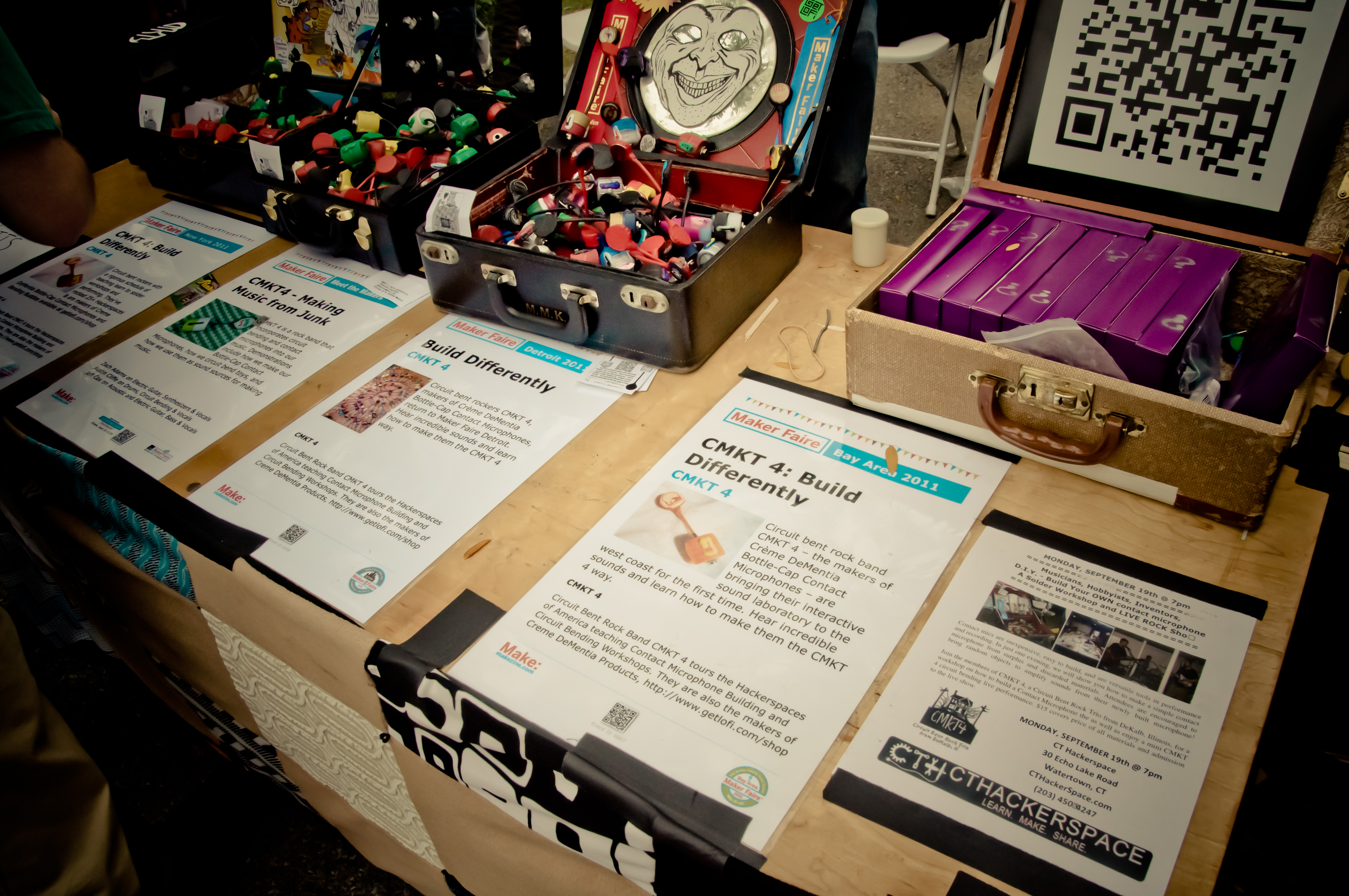
    These guys were great, I am heavily into anything related to the sound field. Even though, people might have thought that this was a very simplistic setup and effect, I was still greatly surprised by the ingenuity and talent that goes into something like this. After all that they still managed to pull off a very nice aesthetic for these extremely awesome mics. I plan to try to build one for myself in the future. :
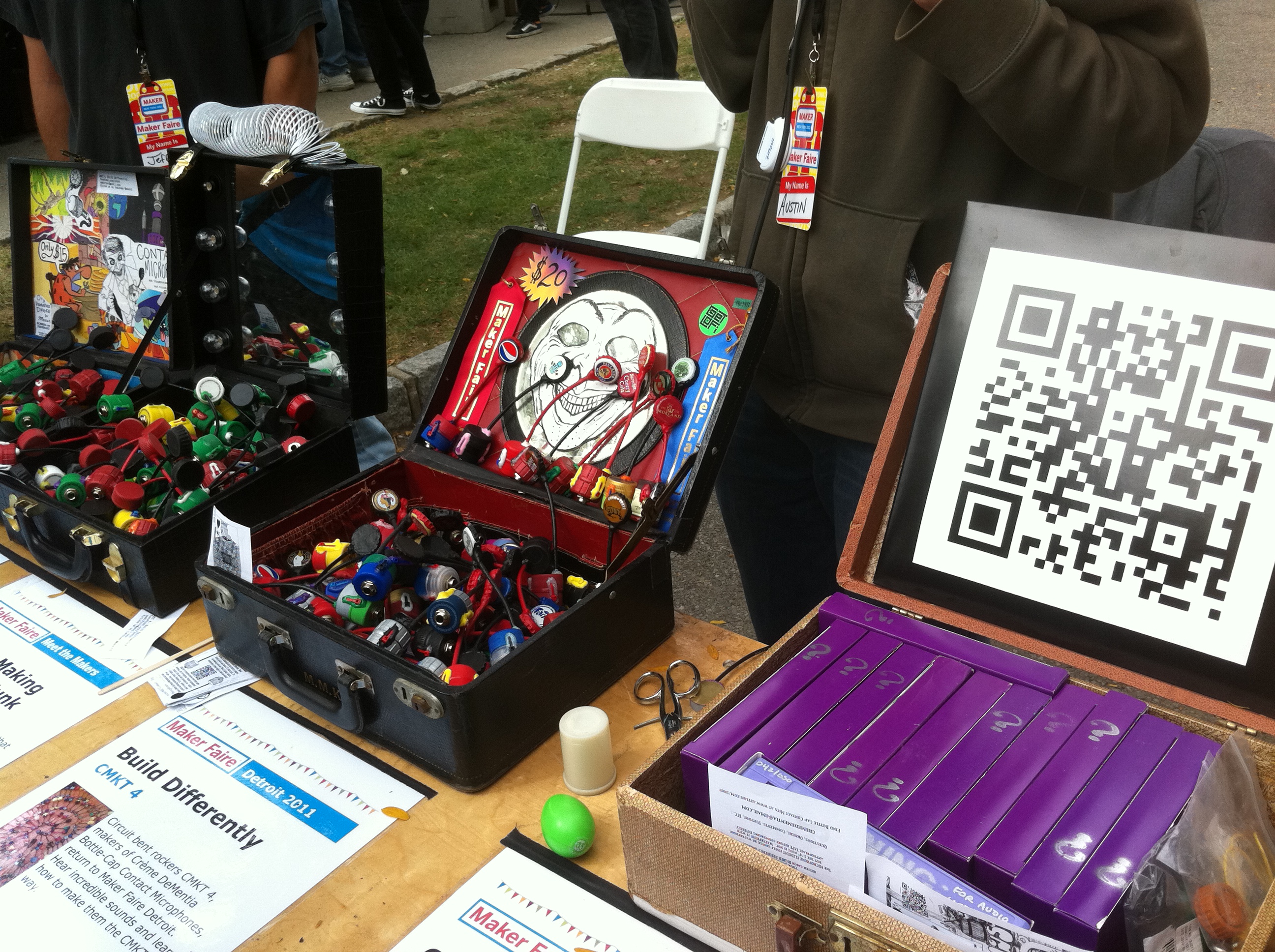
    The microphones are “piezoelectric” which essentially means is that they respond by in large to pressure. Piezo electricity contains the ability of some materials to produce a voltage when subjected to pressure—to convert vibrations into an electrical signal.

    2) Drum Machine/Synth TV Set:

    Again, music oriented Arduino projects win me over. I liked this set up because it incorporated what I believe was an Arduino set up to the television set which triggered an Animation on the adjacent television screen. The drum machine had a similar set up which incorporated what I believe was a light sensor which detected the absence of light and triggered different drum sounds based on how you marked up the projector screen disc. It was a fun set up and I got to play Fur Elise and The Entertainer.


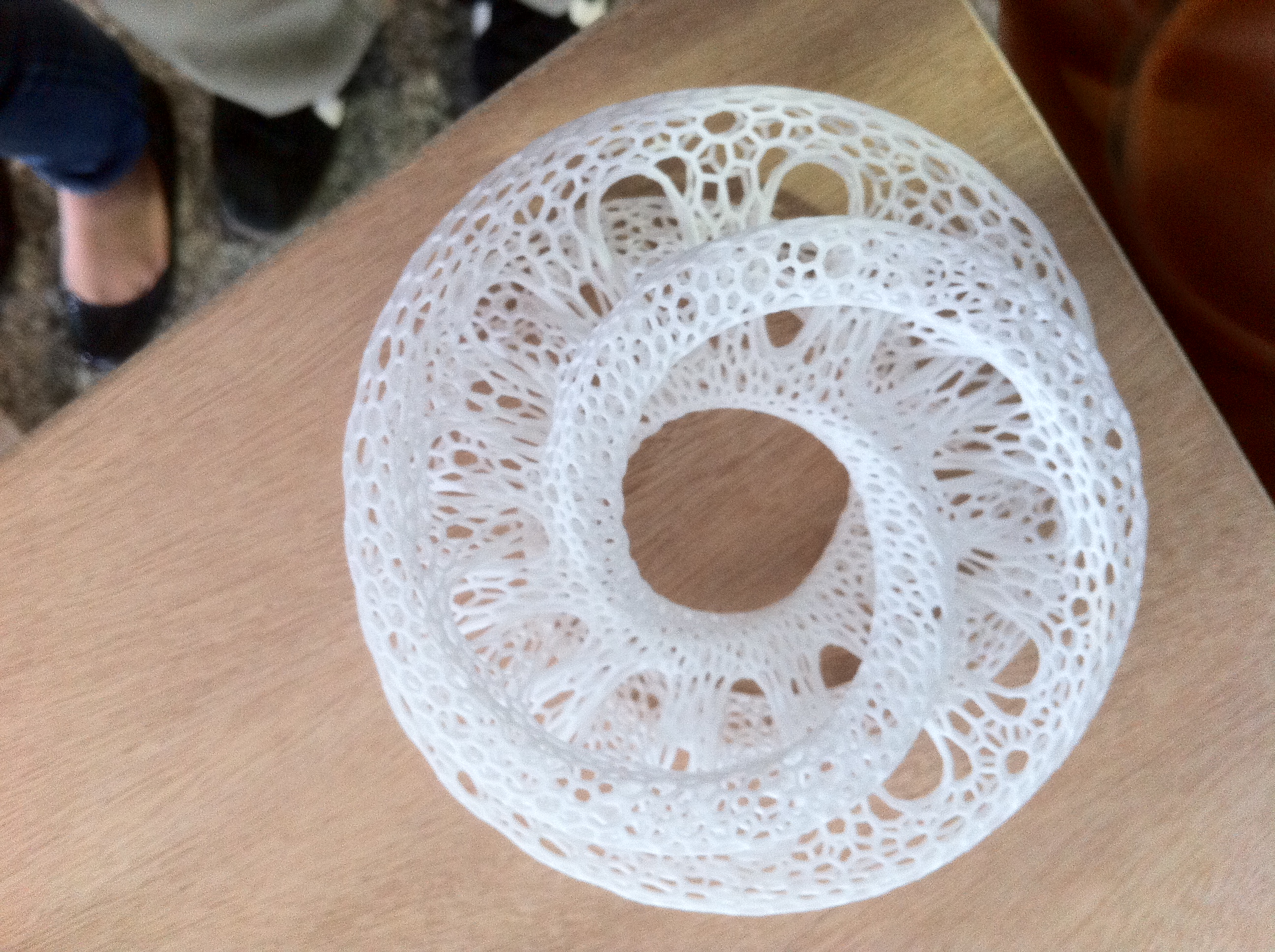
    3) 3-D Printing:

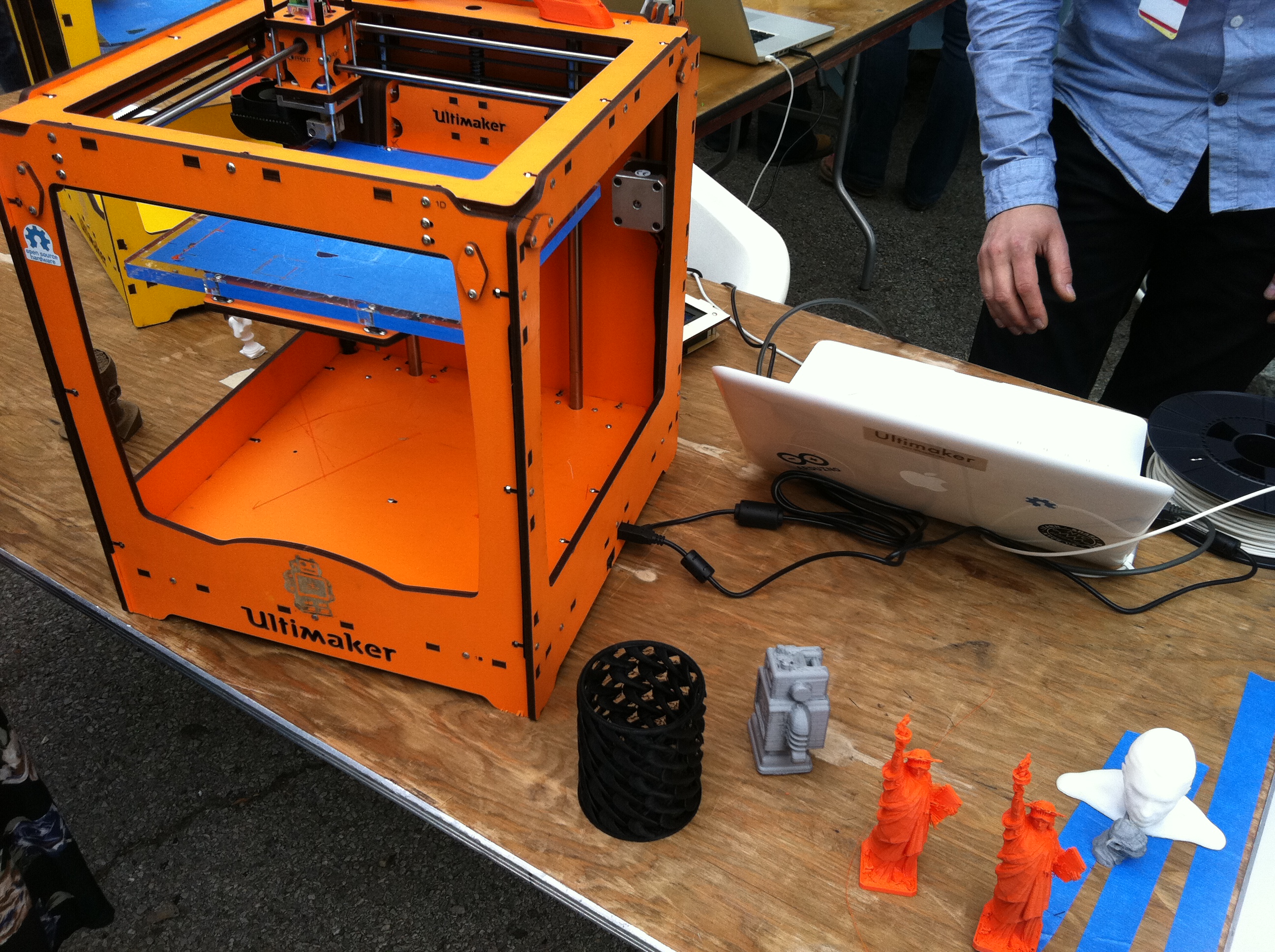
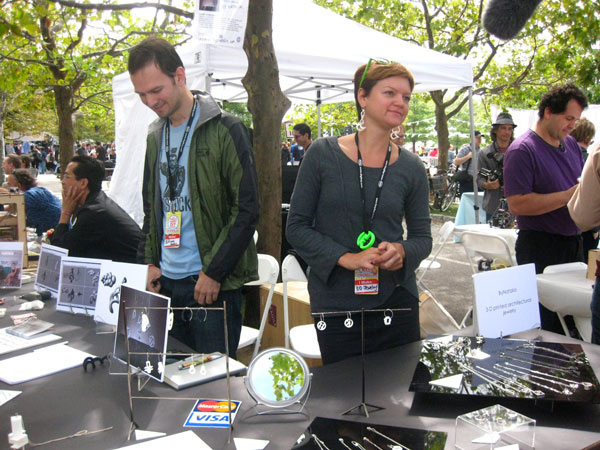
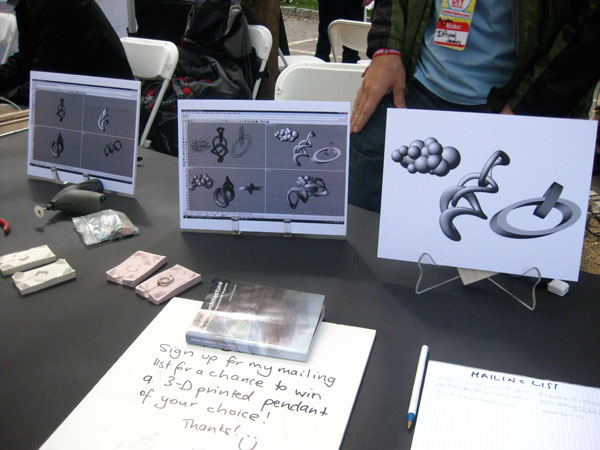
    This never ceases to amaze me. It is growing on me more as I am now learning about “parametric design” for products in my Thesis section but overall, it’s nice to see how things are made and processed. Below I believe are examples of algorithmic product development.
     

    honorable mentions:

    aren’t these helmets cool !?


  • Unknown's avatar

    strawberrymillefuille 4:45 am on September 23, 2011 Permalink | Reply  

    maker faire 

    Maker Faire was really fun! actually I spent most of Saturday looking at stuff with fellow classmates, then Sunday my housemate wanted to go so I went to try the rides I missed like the Water Swing and stuff cos the queues were much shorter the next day. My favourite item from the Arduino tent was Ember:

    ember hack

    Maker website: Ember Kit|| Lower East Kitchen

    It’s conceived by this engaged couple; he’s a plasma scientist and she’s a writer and they worked together to come up with this really cheap yet effective arudino kitchen appliance hack. Basically it’s a box controlling the heating/cooling of an appliance precisely so you can achieve perfect sous vitae temperatures (I know it doesn’t sound like much, but it’s infinitely useful) This really really really excites me because I used to be a backyard chemist, and maintaining temperatures on a consistent level was one of my greatest difficulties (the other one is humidity). Most of the examples listed on the blog/website are developed for Heston-esque cooking techniques, but it can be easily applied to things like distillation of alcohol (70C), 1st stage polyermisation of thermoplastic (85C), making resins/epoxy (104C), bain marie (40C) etc etc… I really want to get one!!!!!!! I think you could even hack to get higher temperatures by combining it with a pressure chamber,  which would be really good if you’re trying to maintain temperature in a  non-conductive element.

    I also really like it ’cause it’s very reasonably priced compared to some of the other items at Maker Faire…. like some of the 3-d printers cost thousands while the more complicated circuits could run into hundreds! Here, it was a complete kit with prices ranging from $50 (the total DIY) to $80 (pre-assembled, just drill and affix)

    Anyway I really enjoyed going to Maker Faire, I hope they have another one next year!

     
  • Unknown's avatar

    mayaweinstein 2:27 am on September 23, 2011 Permalink | Reply  

    Maker Faire 


    The Reverse GeoCache Puzzle
    Mikal Hart

    The Reverse Geocache Puzzle is a wooden box containing an Arduino, the exterior of the box has a small LCD displaying a set of numbers. The user takes the box, places something inside, and programs it to open only in a specific place. The user then gives the box to someone else and that person can only open the box when they get to that specific place, the LCD displays the total miles away from the spot. Hart often produces these boxes as engagement gifts, with the ring inside only to be found and opened when the spot is located. I love the idea of a box of secrets that only opens in a certain spot, the only thing I would change is that I think the boxes could have some more intricate woodwork.


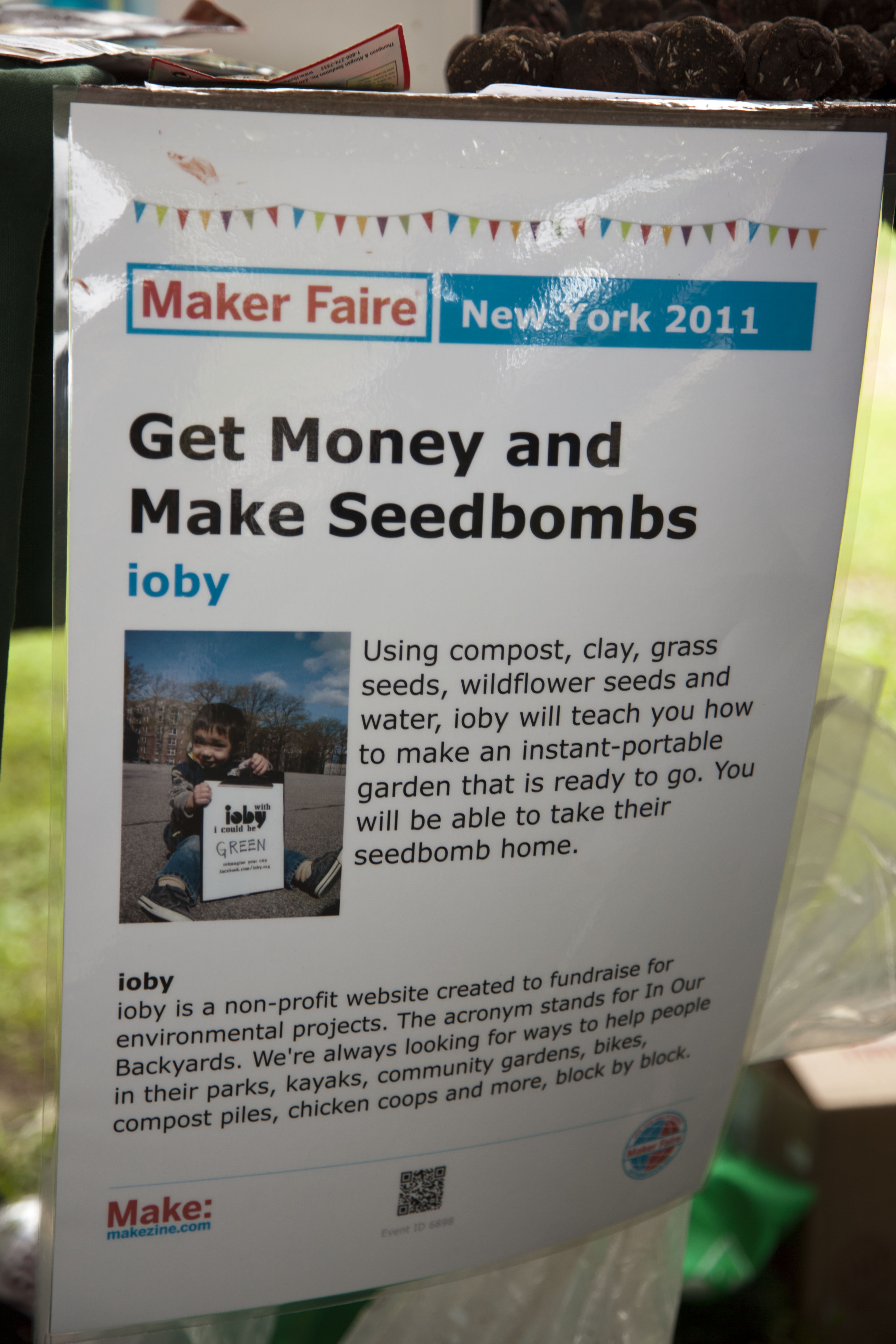
    Seedbombs
    ioby

    Seedbombs start out with a ball of clay, the user takes that clay and rolls it in a mixture of compost, grass seeds and wildflower seeds. The user then tosses that ball into a plot of land where it can grow. The idea behind Seedbombs could be thought of like urban guerrilla farming, if there is an abandoned lot surrounded by a tall fence all one would have to do is throw a Seedbomb over the fence and a garden would be planted. I found it very refreshing that these were one of the few people I met at Maker Faire that were not trying to sell me anything. The company itself is a nonprofit and truly believes in finding new ways to better the community. The idea itself is simple but effective and requires little cost on the side of the user.


    Vertical Theory
    Karen McKay

    Vertical Theory is a form of urban gardening using felt and hydroponics, it takes up a small amount of space and is relatively easy to maintain. Although we are inundated with new urban gardening techniques at the moment I was really drawn to this piece. The use of simple materials such as felt, buckets, funnels and hoses made this particular form of urban gardening feel very accessible. With little money, space, and time I could easily set this up inside my apartment and have a harvest within a month. It really goes to show that you don’t need a lot of money and a huge backyard to have a small garden of your own.

     
  • Unknown's avatar

    danSelden 12:45 am on September 22, 2011 Permalink | Reply  

    Maker Faire-steamPunked 

    VASS with War Machine
    Jacques Laroche

    Description: The VASS (Video Audio Synthesis System) is a real-time Arduino powered visualization system which converts analog audio into data a computer monitor can display.
    This music to video system was just super cool… hooking up an old school beat machine to an Arduino and a monitor. The ability to create visuals through different combinations of sounds is very satisfying… offering a new dimension to an immersive sound experience. I can’t help thinking about its application at live shows where people and musician alike can have an influence on the sound and visuals around them

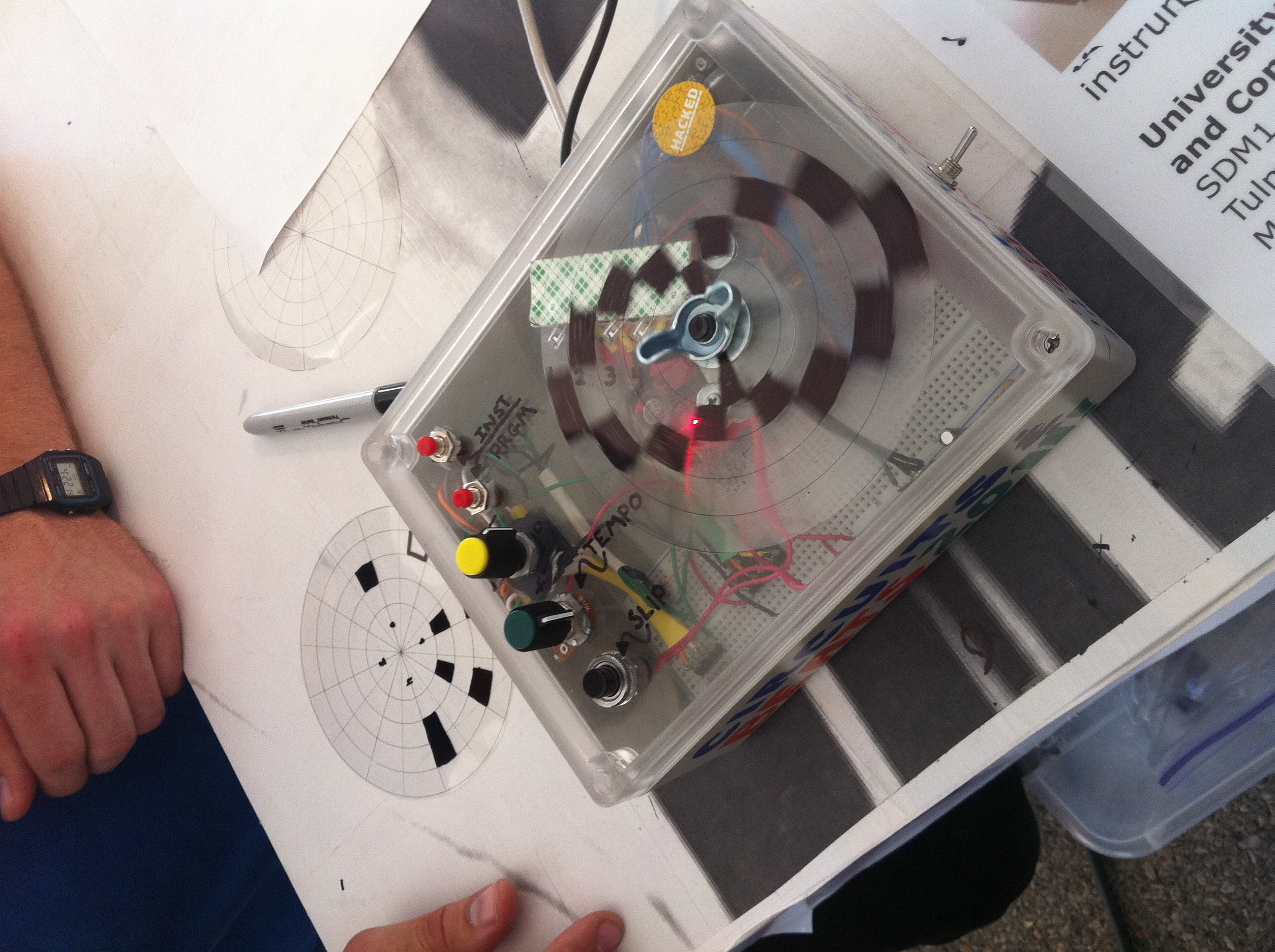
    Spinning Drum Machine 1
    University of Amherst ECE

    Description: The SDM1 is programmed via marks on small discs.  When light is blocked by an opaque mark, the chosen percussion instrument sound is played.  Developed for a Middle School outreach program called Circuits and Beats.
    This was another great project developed to be built and used by Middle Schoolers… it’s super cheap to assemble and the disks which act as the rhythm makers can be easily created by students.  I thought this was generally a great way to expose younger students to basic circuitry and computation… while at the same time pushing them to break out a sharpie to come up with the most imaginative beat combinations.  No two designs are alike, and thus kids are encouraged to explore their creation in a very hands-on way.

    Lumarca
    Matt Parker, Albert Hwang, Elliot Woods

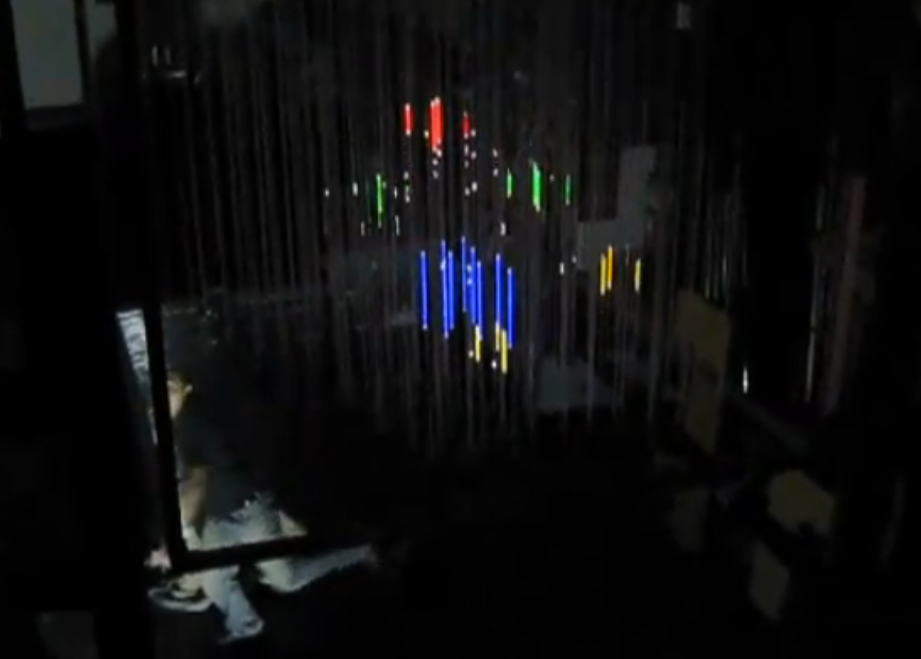
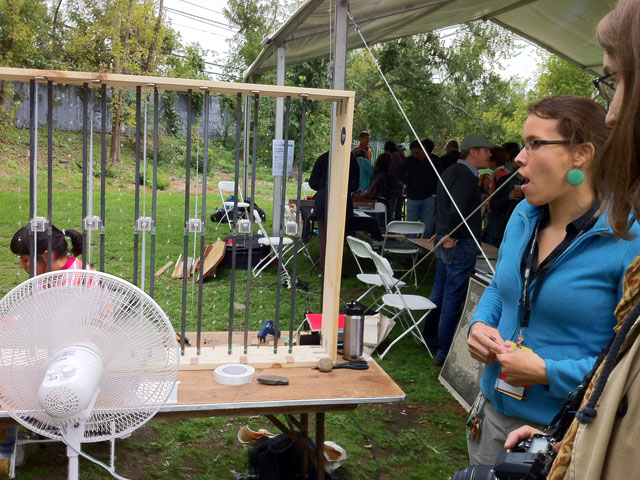
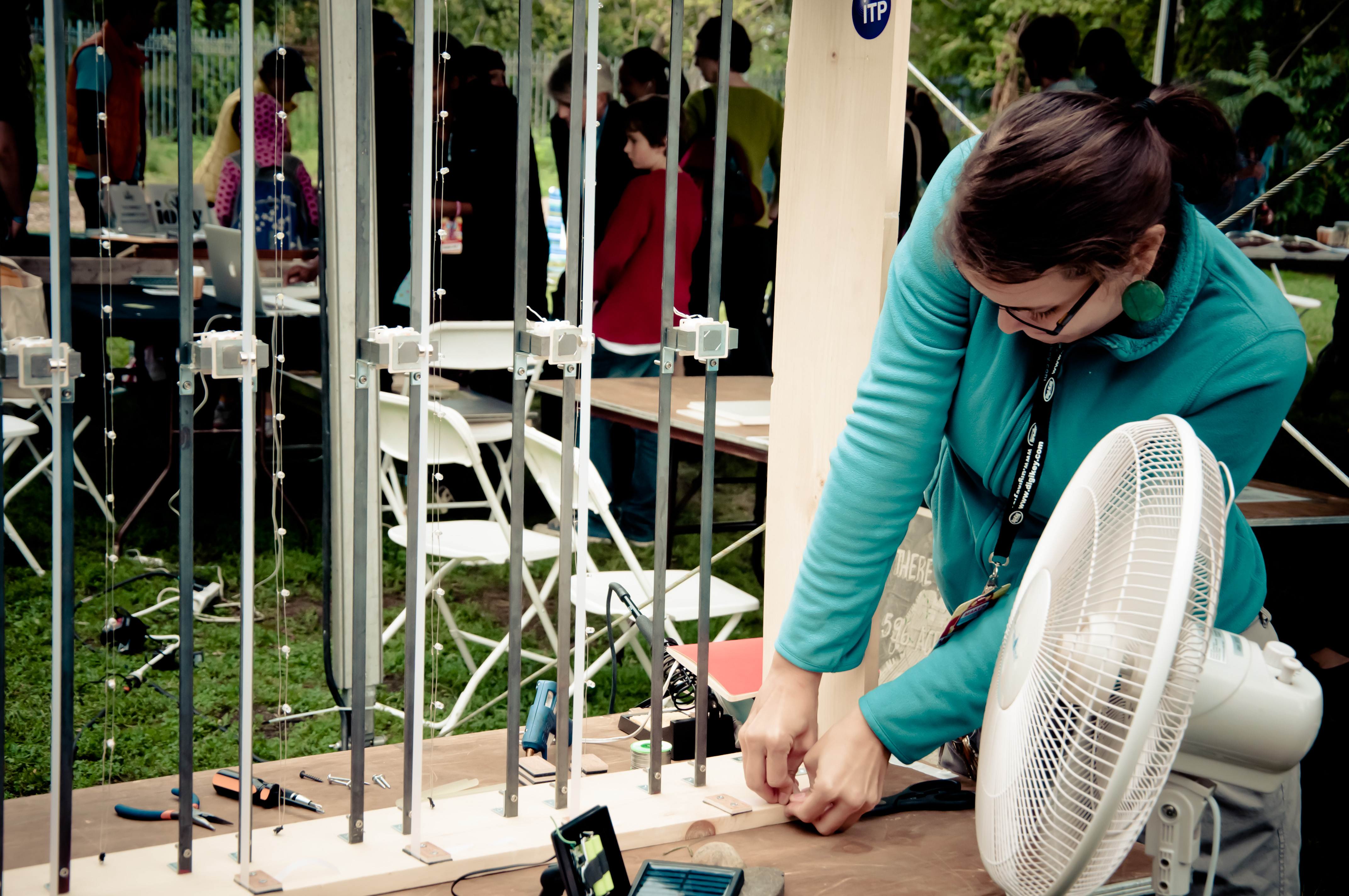
    Description:The Lumarca is a display that renders true 3d volumetric content.  Due to the custom designed string lattice, the project can illuminate any point on any string.  This cost-effective, scalable, and customizable solution is drive by a frequently updated open source library.
    This was hands down my favorite installation… being able to project a 3d visualization onto an array of strings creates a tangible experience that seems to offer great potential for informational displays… bringing a vast 3d scape of data points into the physical environemnt.  The depth really brings life a screen cannot capture… especially when you’re able to walk around it. The only drawback is it must be used in a dark environment… and it’s incredibly sensitive to any alterations to the alignment of the strings.  Other than that, I’m tempted to actual get a starter kit they’ve developed and give it a shot.  I included an additional video that showcases some other functionality.

     
  • Unknown's avatar

    Jun Sik (Jason) Kim 6:47 pm on September 20, 2011 Permalink | Reply  

    Maker Faire Experience 

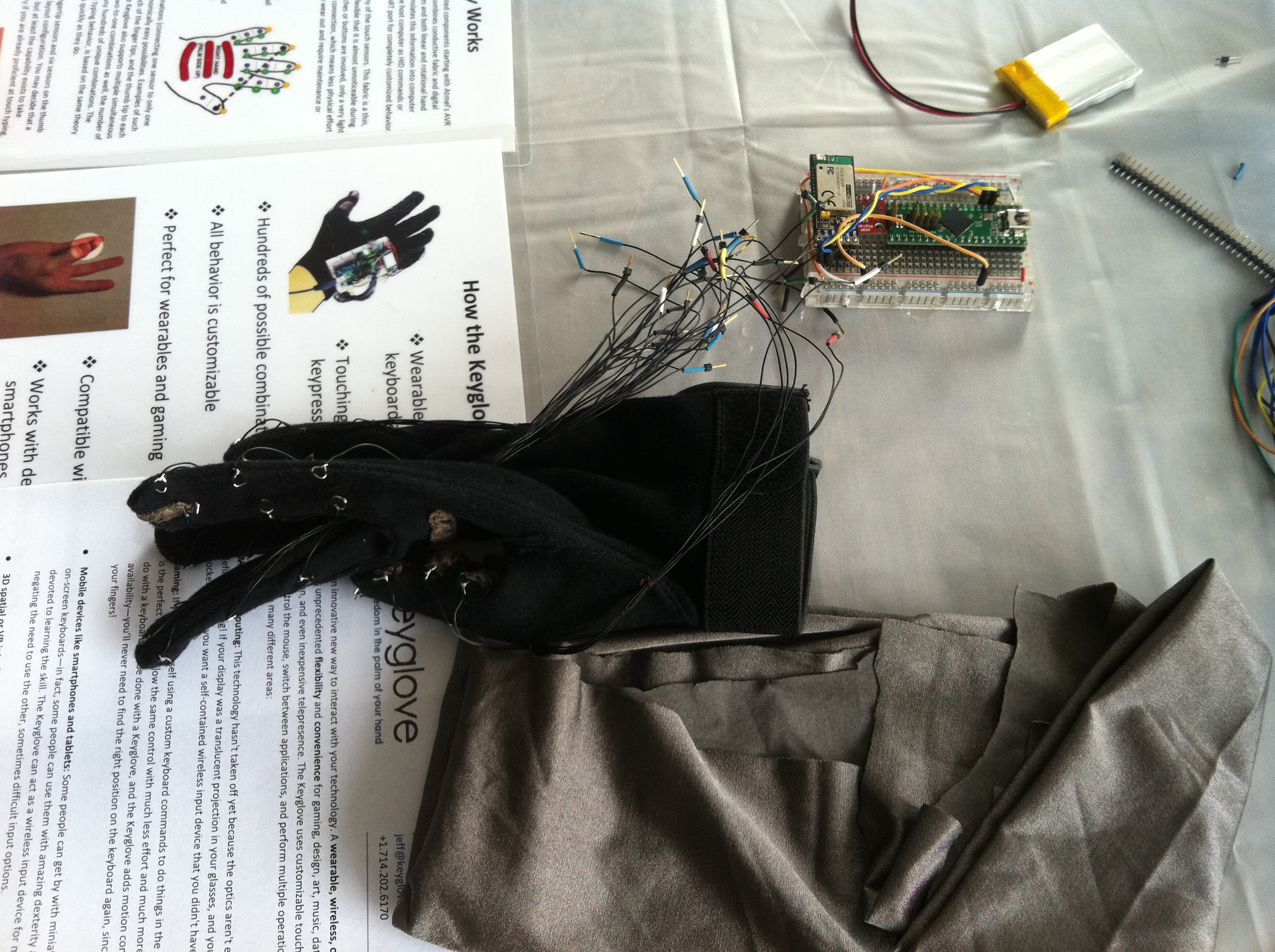
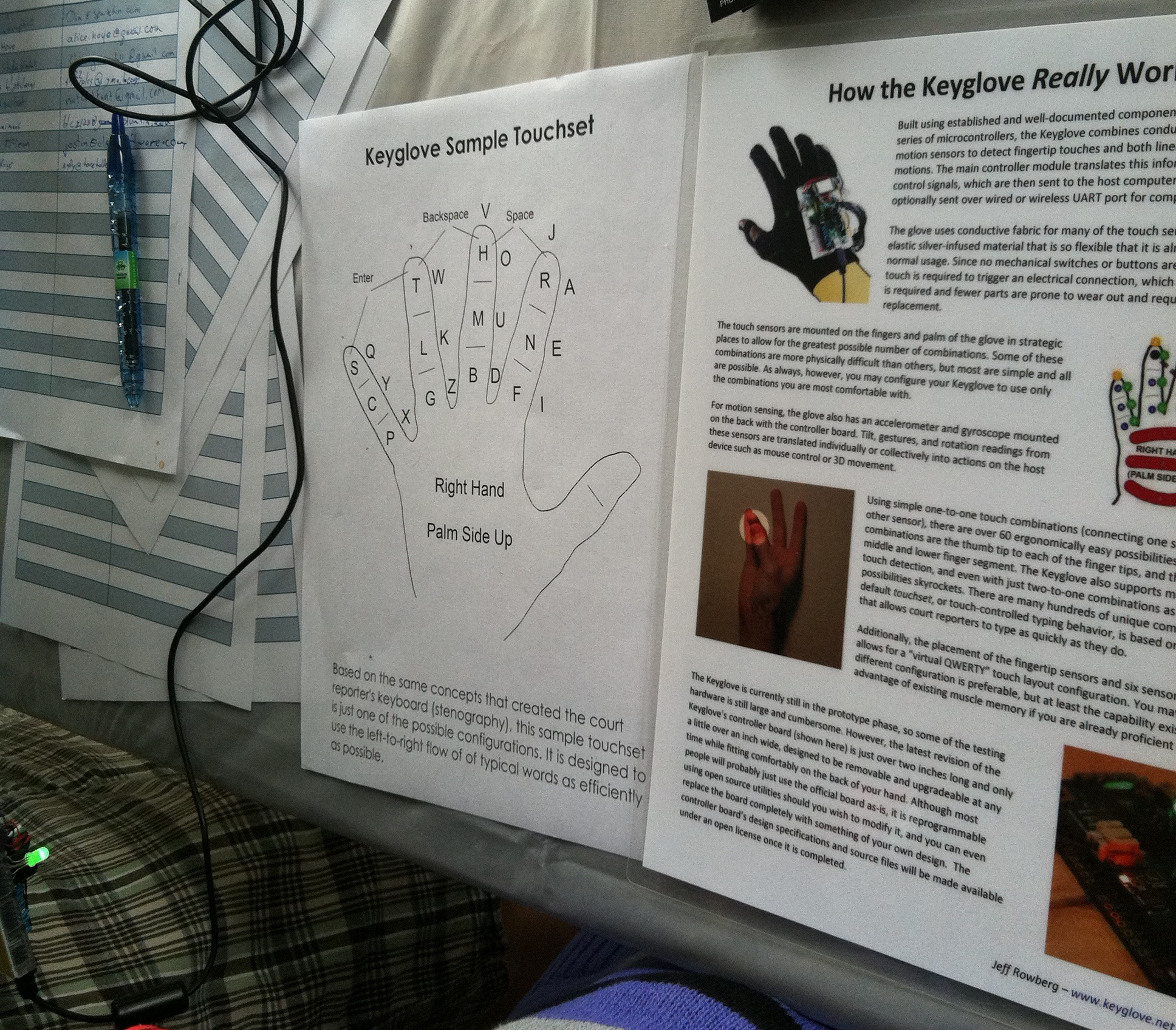
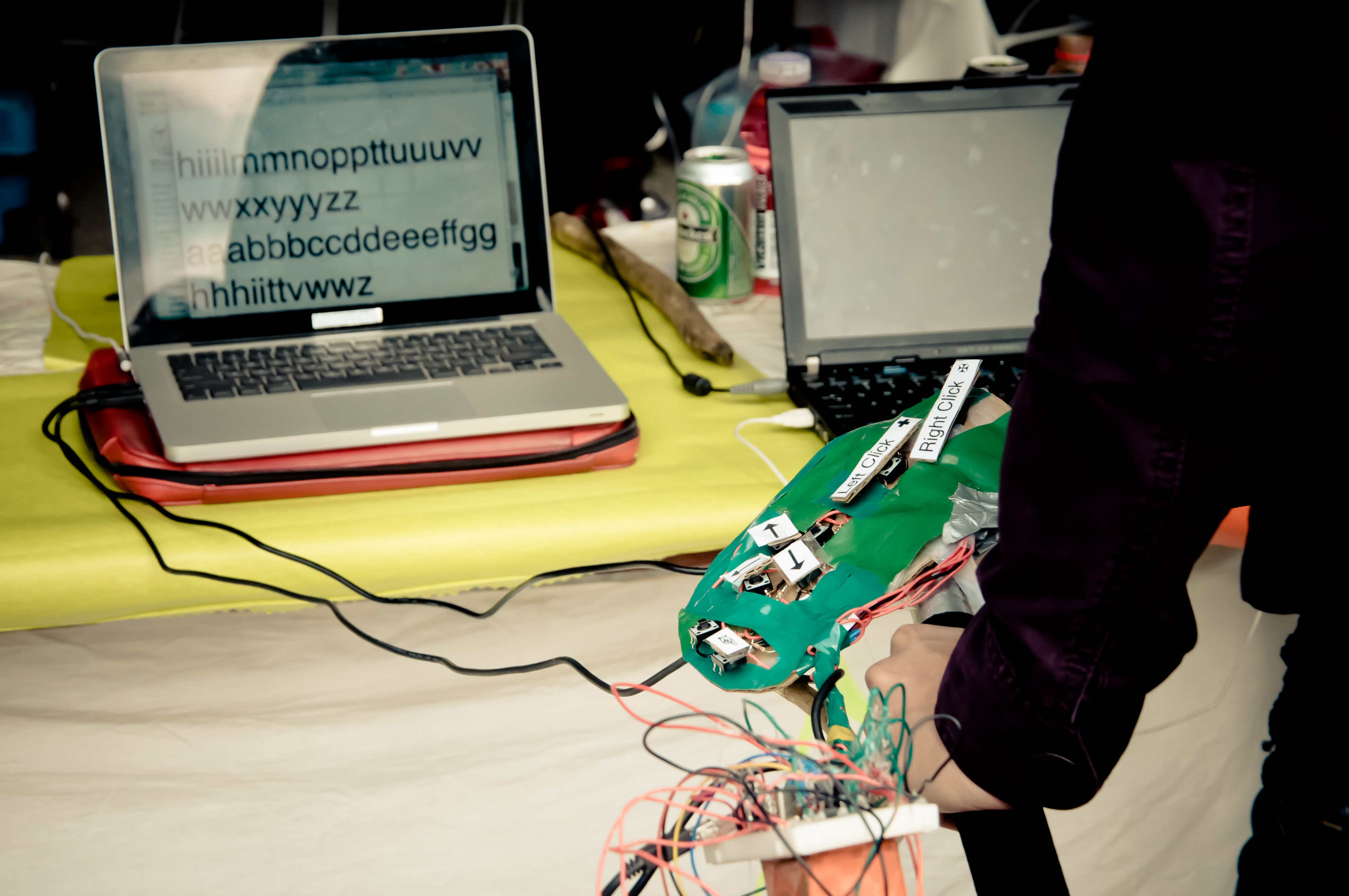
    The product that got me most excited inside the Arduino tent was a product entitled “Keyglove by Jeff Rowberg. This is because during my industrial design studying days, I remembered a concept mobile phone that used fingers to represent keys. What intrigued me the most was the possibility of Keyglove’s further development. Although people are used to QWERTY-based keyboards, it doesn’t necessarily mean it HAS to be the most comfortable. Because the wearable computing market is becoming very popular I believe the Keyglove will impact the world of gaming, design, art, music, etc. I’d love to see a further developed Keyglove where if I made a certain shape with my hand while putting on Keyglove, a 3D CAD software would automatically create the shape I’m making with my hands.

    As I entered the indoor section of the Maker Faire, the work that first caught my eyes was the “Lumarca” designed by Matt Parker. Using a projection, Lumarca used a volumetric display to show viewers a three dimensional image in motion. When I first looked at it in the dark, I initially thought that it involved high technology. But once I asked the artist on the mechanism of Lumarca, I realized it was just a calculated projection in motion towards strings attached to boards. When I researched for Lumarca on the internet, I also realized the creators incorporated Kinect into Lumarca. They created a 3d projection portraying the exact movement of somebody moving infront of the Kinect. What’s so interesting is that the Lumarca need not require a 3d glass in order for people to see 3d.

    Because I have an industrial design background, every time I passed by a 3d printer, I just wanted to buy it. Just last year, I had paid $2000 to create a fine mockup of one of my product designs in Korea. Seeing that a 3d printer now only costs about $1600 shocks me. There were 3D printers that worked by addition while there were 3D printers that worked by subtraction. Because I’ve already seen many printers that work by subtracting from the raw material, I was more interested on those printers that worked by addition. An example would be the “Ultimaker: the fast, affordable, large build volume, open source 3D printing” made by the Ultimaker. Just like its name, it was indeed a fast, affordable, open source 3d printer. It would accept almost any type of CAD file and would print in such detail that I couldn’t believe it. It created what seemed to me like a billion layers of shape in order to achieve the detail of the final product. It was very fun to see.

    I really enjoyed the Maker Faire!


  • Unknown's avatar

    noadol 4:39 am on September 20, 2011 Permalink | Reply  

    maker fair 

    1/ The Anywhere Organ
    by Matthew Bo Bogatti

    The idea is to have a mobile pipe organ, that can change in size and layout, according to the space.

    The interface is a simple MIDI, fronting a bunch of organs (group of pipes). Each of the octaves operate a different organ. You have stickers on the keyboard indicating that, so the interface is effective and communicates what there is to do, no frustration.

    The computer generates MIDI signals. The organ has a microchip (boot loaded AVR chip) that converts MIDI to serial. The AVR communicates with transistors: takes the low power signals from the MIDI and the transistors turn it to a hight power signals that control all the valve that open the air. Pressing a key, the pipe has a magnet that opens up the valve and let the air come up from the blower, and produce a sound.

    I find the objects’ design beautiful; half “traditional” half modern machine and an interesting materials mix: old original metal pipes, wood shaped made by laser cutter, plastic tubes.

    // The organ can play without the computer //

    2/ The Simple CV
    by Katherin Scott, Anthpny Oliver, Nathan Oostendorp


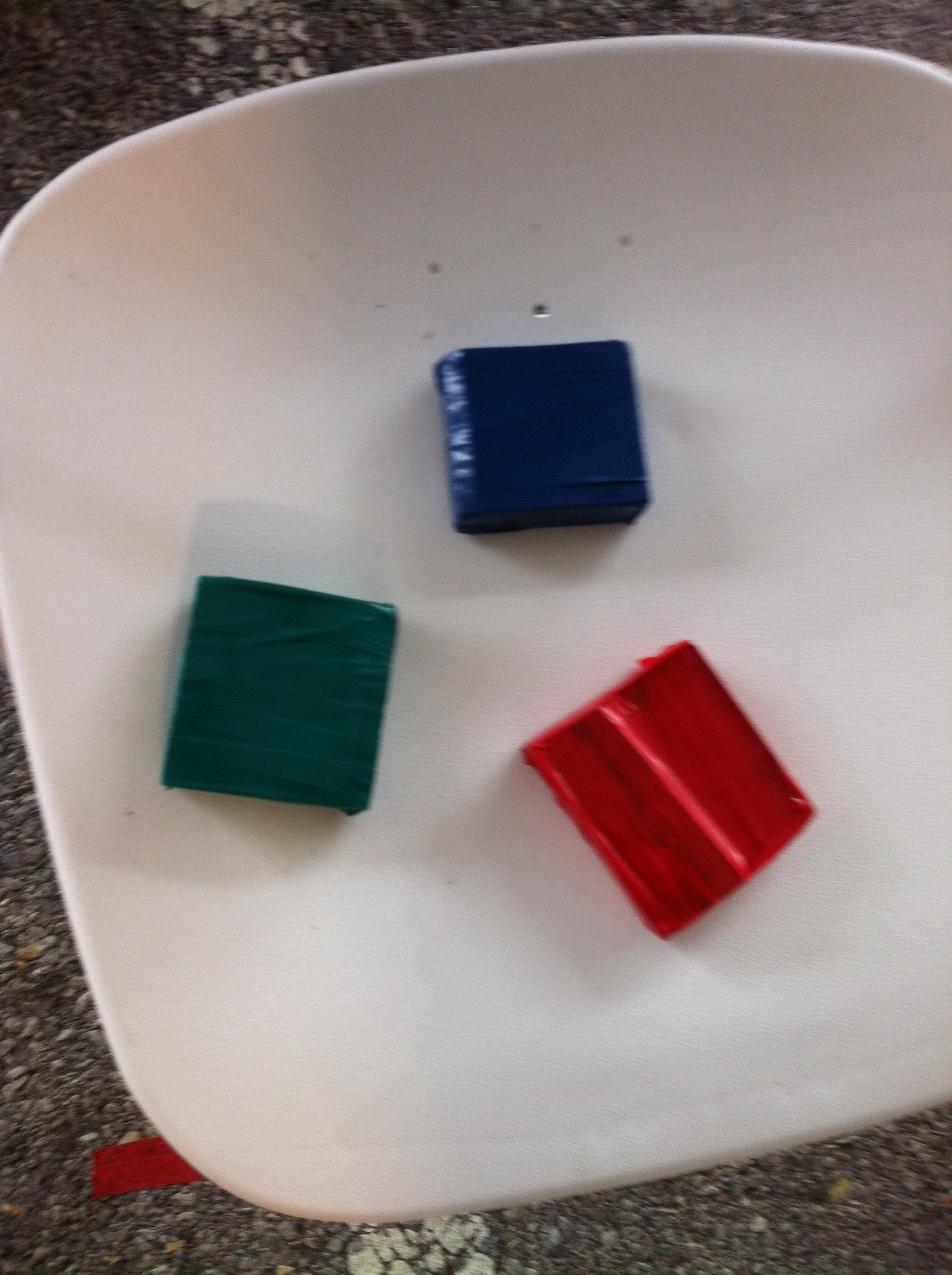
    Three colored cubes that are benign used as painting tools/brushes for painting on the TV screen.
    The TV has a webcam above it and the technology that is being used is best described in the simplecv.org website:
    “SimpleCV is a Python interface to several powerful open source computer vision libraries in a single convenient package.”
    For this project they also used Kinect.

    I like this project for its simple interface and because of the fact that these low-tech wooden cubes activate a digital reaction, adding an element of surprise.


    3/ Wheelchair DJ System
    by John Schimmel

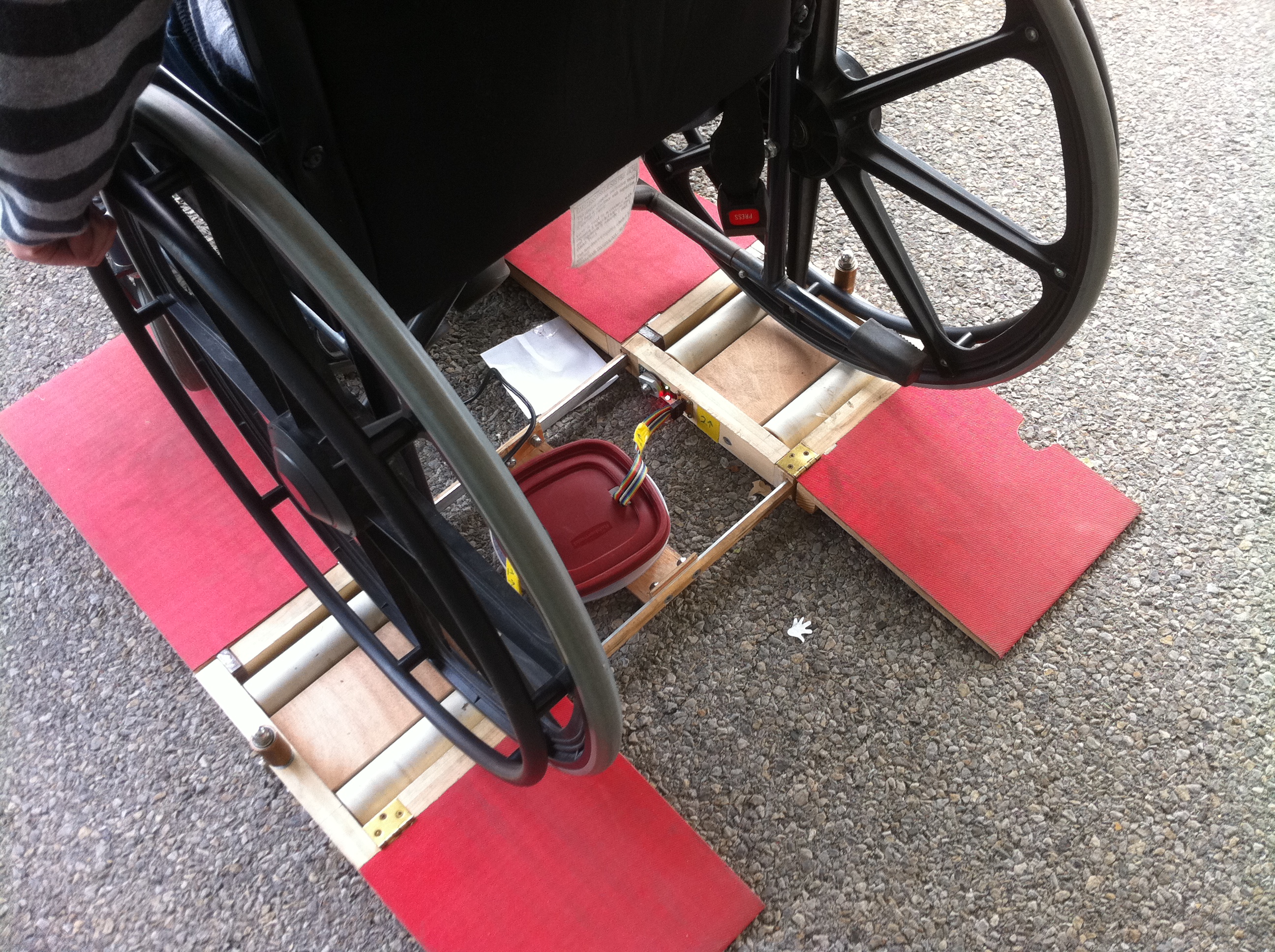
    The project was tailor-made for a disabled 18 years old boy. Instead of using hands to scratch on turntables, you can use the wheels  and by moving them back and forth, manipulate two mp3s. In front of the wheelchair there’s the computer screen with and interface that resemble the DJ set. The connection between the action and the reaction is pretty clear.


    The wheelchair sits on rollers that detects the speed and direction of each wheel. The software and the simple interface design is in Processing. Underneath all that is the Arduino circuit (in the red box), that is connected to the rollers.

     
  • Unknown's avatar

    Catalina 3:48 am on September 20, 2011 Permalink | Reply  

    A Sunday at the Makers Faire by Catalina 

    The following are my 3 favorite projects:

    A week ago I found on the street this amazing typewriter and took it home just because I couldn’t let it out there, it even had it’s own box! And what a great surprise when I get down into the SCI hall and found this USB typewriter. It’s developed with Arduino (Atmega328P) and a sensor board to capture the keyboard; once you connect it, via USB to your computer, you have a great new keyboard.

    If you want to learn more about it, visit the site: http://www.usbtypewriter.com/

    Sonic Threads by Rita Shewbridge.

    I found this to be a really interesting and fun approach to fashion & technology. The dress is made using conductive threads and uses Arduino. The idea is that you touch the dress and tells you a story, reconnecting this “new world” with the old way of interaction within people, storytelling.

    If you want to learn more about it, visit the site: http://www.fashioningtech.com/video/sonic-threads

    Rhythm Synthesis

    This project was the Thesis project of a Parson’s student Ryan Raffa. It’s an amazing project, that allow people to interact, to create music and to have fun. It’s a light-box that make sound using colors, shapes and sound. The user moves the color figures and it generates different sounds composition.

    If you want to learn more about it, visit the site: http://www.ryanraffa.com/parsons/blog/

    I have to mention that I also loved the Jewelry designed by Natalia Krasnodebska using autocad and printed in a 3-d printer – Really pretty…..

    Check it out at http://www.bynatalia.com

     
  • Unknown's avatar

    yongjaelee2011 5:52 pm on September 18, 2011 Permalink | Reply  

    3 Projects I like at the Maker Faire 

    1 . The Empowerment Plan : Veronika Scott at the College of Creative Studies

    The jacket is self-heated, waterproof, and transforms into a sleeping bag at night for a homeless people. I am very interested in using our knowledge in our daily lives and for people. I think that Veronika’s idea and her coat are great example of using our knowledge to needed people.

    empwermentplan.org

    2. In the Wind: Michell Cardona and Nelson Ramon at NYU ITP

    A project on self-generating power with wind. The project is great use of alernative energy. Magnetics in the center of the bands vibrate as wind blows and create energy. These two people studies at the NYU ITP.

    http://www.datumdezign.com/inthewind

    3. Spinning Drum: University of Massachusetts Amherst, Electric Computer Engineering

    A user hits the synthisizer key inputs to create animation on the screen. The music player is very simple and easy to use, so I found lots of not technical users having fun to play with it.

     
  • Unknown's avatar

    firmread 8:54 am on September 18, 2011 Permalink | Reply  

    Maker Faire!!! 

    Here we go, Maker Faire!

    “In the wind” By ITP students Michell Cardona and Nelson Ramon
    http://blog.makezine.com/archive/2011/08/oscillating-wind-generator-flutters-and-flickers.html
    Basically, this project works by using wind to generate electricity to operate the LED light.
    Nice prototype for some self-sufficiency circuit.

    Next, “Contact Microphone”, it is a simple kit using the piezoelectric pickup to get the vibration. But the application of the kit can happen in very variety ways. For video example check out their site here.

    Last but not least, “Electrisize Machines” by Samwell Freeman. I like how the project is not so practical but more like a critical design about how we use computer so much and don’t do enough body exercise. So you just have to exercise to do simple inputs like keyboard and mouse.
    http://makerfaire.com/pub/e/6962

    There is other 3 projects that I like on Major Studio blog (It’s double assignments on this Faire, sweet huh?). Just wanna post a quick link here in case you guys care to check it out.

     
  • Unknown's avatar

    danSelden 4:39 pm on September 16, 2011 Permalink | Reply  

    Whutt-Up P-Comp 

    Hello world!

    I’m Dan and my background is in Landscape Architecture and Urban Planning.  I have become increasingly fascinated by our digital world and the integration of new media technology within our built environment. How can a space, connected both physically and virtually, enhance the role of the public realm?  While studying landscape architecture and the city were a great foundation for these interests, they ultimately prepared me for practice and not exploration. By entering the MFADT program I hope to continue to refine these interests and push my fascination with design at the intersection of architecture, biology, social interaction and computation. I think P-Comp will be a good place to build the skill set necessary for this exploration.

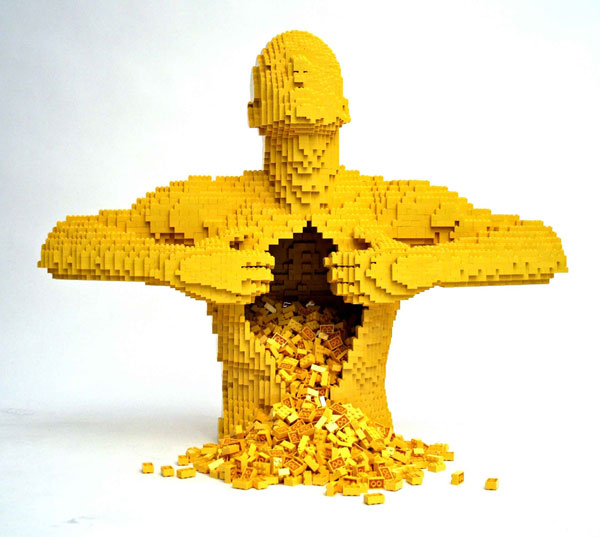
    My favorite toy as a kid was hands down Lego… the possibilities are endless.

     
  • Unknown's avatar

    firmread 4:38 pm on September 16, 2011 Permalink | Reply  

    Firm Tharit Tothong 

    Hi everybody, I’m Firm from Bangkok, Thailand.
    My undergrad major is Interior Architecture. After graduated I have this interested in media design.

    I had a class with one of DT alumni in Thailand. He introduced me to the scene of Physical Computing and CV.
    Main platform I used back then is Max/MSP.
    So I know a bit on the basic, but I used to work on just PIC Microcontroller and how to make it works.
    Which now I have bought Arduino,, From now on is the fresh start though.

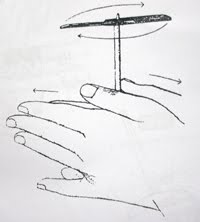
    My favorite childhood toy,,,

    Bamboo Copter!
    (Actually most of them were plastic but, somehow, we keep calling it bamboo.)

     
  • Unknown's avatar

    awong315 4:37 pm on September 16, 2011 Permalink | Reply  

    Amanda Wong 

    I am studying fine art at Parsons, and have been interested in creating interactive sculptures. I often think about the types of consciousness  used to describe notions of the nonhuman including animals and objects/nonliving and the living.  I thought this class would give me the technical ability to make animated objects. My favorite toy was a stuffed Thumper.

     
  • Unknown's avatar

    Catalina 4:35 pm on September 16, 2011 Permalink | Reply  

    About me – Catalina 

    My name is Catalina and I come from Chile.

    After graduating from Civil engineering and work for a couple of years I decided it was not what I wanted to do and came to NY and pursued the MA in Media Studies. What I expect about this program and this course is to somehow put the Engineering and Media knowledge together and see what comes out of it.
    My Favorite toy: This TV set….

     
  • Unknown's avatar

    Fred Andrade 4:35 pm on September 16, 2011 Permalink | Reply  

    Freddie Andrade 

    Background I’m a junior BFA DT student from Sao Paulo, Brazil. My professional background is in product design and I have experience in film and production.

    I joined this class to begin working towards robotics from a design perspective.

    My favorite childhood toys were the Warhammer game and making it’s characters.

    warhammer


  • Unknown's avatar

    mónica arias. 4:32 pm on September 16, 2011 Permalink | Reply  

    hello world! 

    Hey, I’m Mónica. I’m a second year MFA D+T candidate, and I come from an Advertising/Graphic Design background. I studied the equivalent of Visual Communications in Dominican Republic (yes, I’m one of the girls with an accent). In my first semester, during my CCLab class I was introduced to Arduino and physical computing. Since I was learning, I tried to incorporate it to projects across my classes. I LOVED IT. I’ve always been a sucker for wires and electronics, so this felt natural to do. For a year now, most of my projects have involved PComp, just knowing the basics. Now I finally decided to signed up for this class and take it one step further.

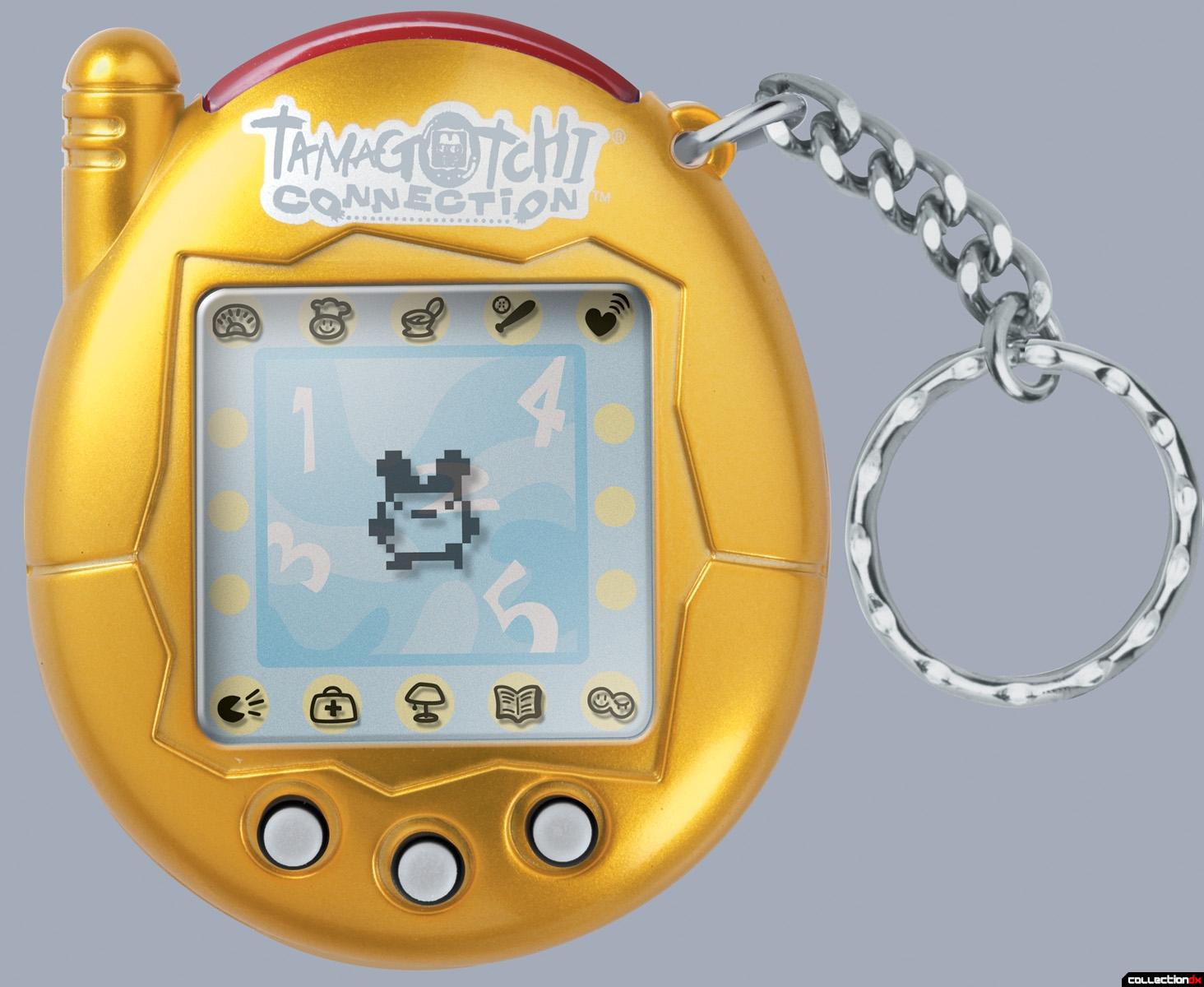
    And here you can see my favorite childhood toy: Tamagotchi (I think). I was a very hyperactive kid, so I was always playing with something different every week, BUT this is the one I remember having the most fun and spending hours feeding my little baby dinosaur, so it must have had some impact on me.

     
  • Unknown's avatar

    Aneta Genova 4:30 pm on September 16, 2011 Permalink | Reply
    Tags:   

    Aneta: “Hello!” 

    My name is Aneta and my background is in fashion and accessory design, but I am a semi geek at heart. This class is perfect for me because I’d like to start incorporating physical computing into the accessories I am making.

    When I was little I loved taking apart and rebuilding everything around me.

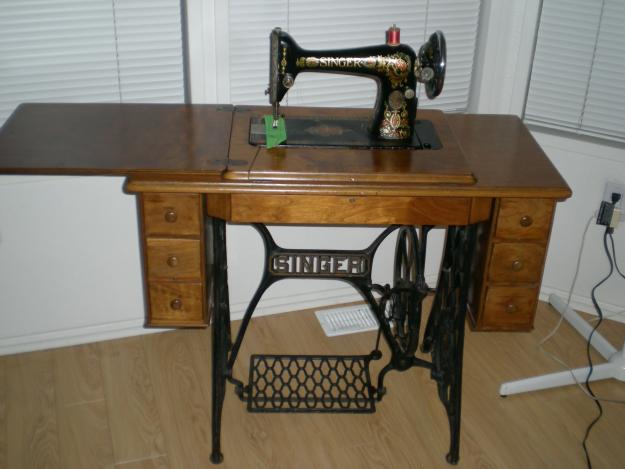
    I can’t think of a specific toy but I loved sewing little clothes for my dolls and my grandma’s sewing machine was definitely one of my favorites. Actually she had a few singer machines. One looked pretty much like this one,

    And another one looked like this oen:

     
  • Unknown's avatar

    strawberrymillefuille 4:29 pm on September 16, 2011 Permalink | Reply  

    intro + favourite toy 

    Background

    Hello! My name is Rachel, and I’m originally from Singapore. I grew up in HongKong for 7 years, moved back to Singapore for secondary/highschool, then moved to China for 6 months for internship, then to Japan for another 3 months and finally settled in University of Melbourne, Australia for bachelor degree majoring in media studies.

    In terms of work experience I’ve done quite a lot of legal (and some barely legal) jobs,  mostly because I started exhibiting (fine arts) when I was 16 and needed the money for shows/supplies. My foundation is in fine arts, particularly classical oil painting then photography in university and finally to performance and digital interactive art.

    NYC has so far been pretty cool, and last week I tried my first funnel cake!!! I plan to try all American foods while I’m here

    My Interest in this Class

    Even though I have a bit of experience with physical computing, I feel like there’s lots of learn more and also I really want to learn it properly instead of being half-baked about it. Mostly I really like physical computing and circuitry, and it just seems wonderful to be able to create these little toys – almost gifts, that can make people feel happier. It’s like, I don’t know why but the idea of having a blinking LED pin is both cute and cool and whoa awesome, you just can’t help but think it’s wonderful. I’ll like to be able to learn the skills to make these things  so that other people can enjoy them.

     Favourite Toy(s)

    I’m hypoallergic to many things; one of them being synthetic hair (esp. in dolls’) so I spent most of my childhood playing Lego with my siblings. Actually we got really good at it and there was a period of time that my sister, brother and I were entering Lego juniors’ competitions as a team to win money.  My favourite type of Lego was called Lego Technic:

    After Lego (and to a lesser extent, Tamiya racing) my siblings and I moved on to digital/console games. We pooled our cash together to buy a Playstation when I was 10, and from then onwards it was mostly gaming.  My siblings and I are still gaming addicts though, it seems that you never grow out of childhood only now with a ‘professional’ job you earn more money to buy all the games you want without a parent scolding you (hah!)

     
  • Unknown's avatar

    josefayala 4:28 pm on September 16, 2011 Permalink | Reply
    Tags:   

    Hi 

    I’m Josef (by the way)

    A)   BS/MS

    B)   I am interested in this class because I would like to create in depth and technical projects. More importantly, I would like to immerse myself in the culture that surrounds Physical Computing to get a feel for what people are making and what problems people are trying to solve  within their respective fields.

    C)

     
c
Compose new post
j
Next post/Next comment
k
Previous post/Previous comment
r
Reply
e
Edit
o
Show/Hide comments
t
Go to top
l
Go to login
h
Show/Hide help
shift + esc
Cancel